
What Makes A Solar Pump Earthing Kit Essential For PM KUSUM Installations ?
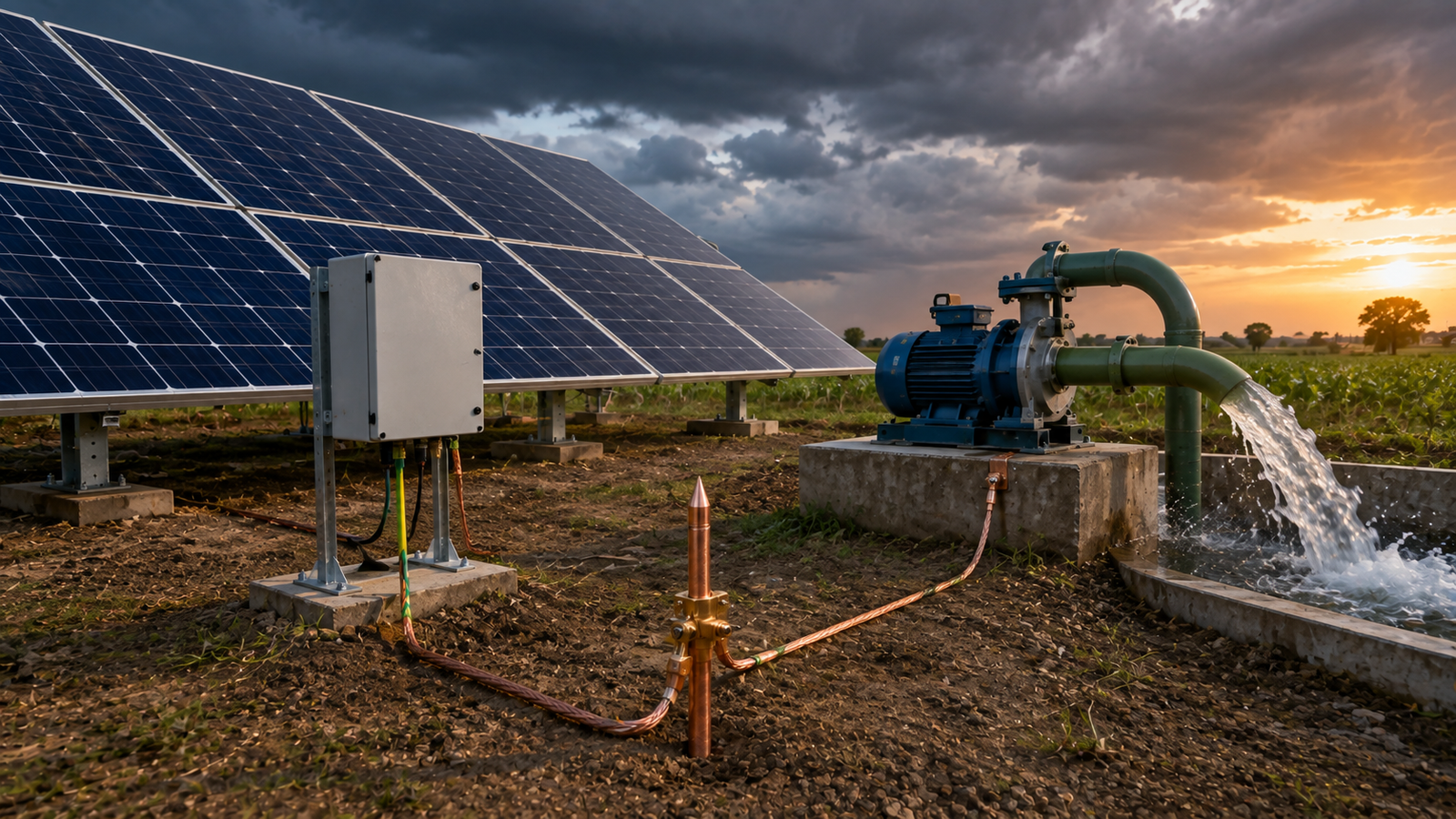
Farmers and installers working under the PM KUSUM scheme often focus heavily on pump capacity, panel wattage, and subsidy paperwork, while earthing quietly gets treated as an afterthought. This is a mistake with real consequences. Agricultural sites present some of the most challenging earthing conditions in the entire solar industry, and a properly engineered Solar Pump Earthing Kit is what stands between a safe, long-lasting installation and a costly, recurring problem. Why Are Agricultural Sites Particularly Challenging For Earthing ? Farmland presents a set of conditions rarely seen in commercial or industrial solar installations, and each one affects earthing performance differently. → Soil resistivity varies dramatically across seasons, especially between monsoon and dry months → Remote locations mean maintenance visits happen far less frequently than in urban sites → Limited technical supervision during installation increases the chance of shortcuts What Should A Proper Solar Pump Earthing Kit Actually Contain ? A generic industrial earthing rod repurposed for agricultural use rarely performs to the standard a solar pump installation actually needs. → An electrode suited specifically to variable, often dry agricultural soil → Backfill compound formulated to maintain conductivity through seasonal moisture swings → Simple, accessible pit design suited to minimal ongoing maintenance visits Why Does PM KUSUM Specifically Demand Extra Attention To Earthing ? The scheme has driven a massive increase in solar pump installations across rural India, often executed at high volume and tight timelines by installers managing many sites simultaneously. → High installation volume can lead to rushed, inconsistent earthing practices → Remote farm locations make post-installation correction significantly harder → A properly engineered kit reduces long-term failure risk without requiring frequent farmer intervention Myths And Facts About Solar Pump Earthing Myth : Agricultural installations do not really need dedicated earthing kits. Fact : Farmland often has more variable and challenging soil conditions than urban sites, making proper earthing even more important, not less. Myth : Any earthing rod works fine as long as it is buried deep enough. Fact : Depth alone does not guarantee performance, backfill compound and electrode material both play a significant role in actual conductivity. Myth : Earthing quality does not affect pump performance directly. Fact : Poor earthing increases fault current risk to the pump motor and control panel, potentially causing damage during electrical faults or lightning events. What Should Installers Prioritize When Selecting A Kit ? Installers managing multiple PM KUSUM sites need consistency as much as they need quality on any single installation. → A kit that performs reliably across varied soil types without site-specific customization → Simple installation that does not require specialized equipment in remote locations → Documentation that supports scheme compliance and future inspection requirements Before You Choose, Here Is What Most Buyers Ask First : Is a standard earthing rod sufficient for a solar pump installation ? → Generally not ideal, since agricultural soil conditions often demand a properly formulated kit rather than a generic industrial rod. How often should earthing be checked on a solar pump system ? → An annual check is advisable, particularly after monsoon season when soil resistivity shifts most significantly. Does PM KUSUM compliance require specific earthing documentation ? → Proper documentation supports long-term scheme compliance and simplifies future inspections or claims if issues arise. A Farm Cannot Call For Emergency Service The Same Way A City Site Can : Solar pump installations under PM KUSUM operate in conditions where mistakes are far harder to correct after the fact, making the initial earthing kit choice more important than it often receives credit for. As a leading manufacturer of earthing, grounding and lightning protection solutions in Pune, U-Protec manufactures solar pump earthing kits engineered specifically for agricultural conditions, giving installers a dependable solution suited to the realities of rural deployment.
Why Solar Cable Tray Manufacturer Selection Affects Long-Term Plant Safety ?
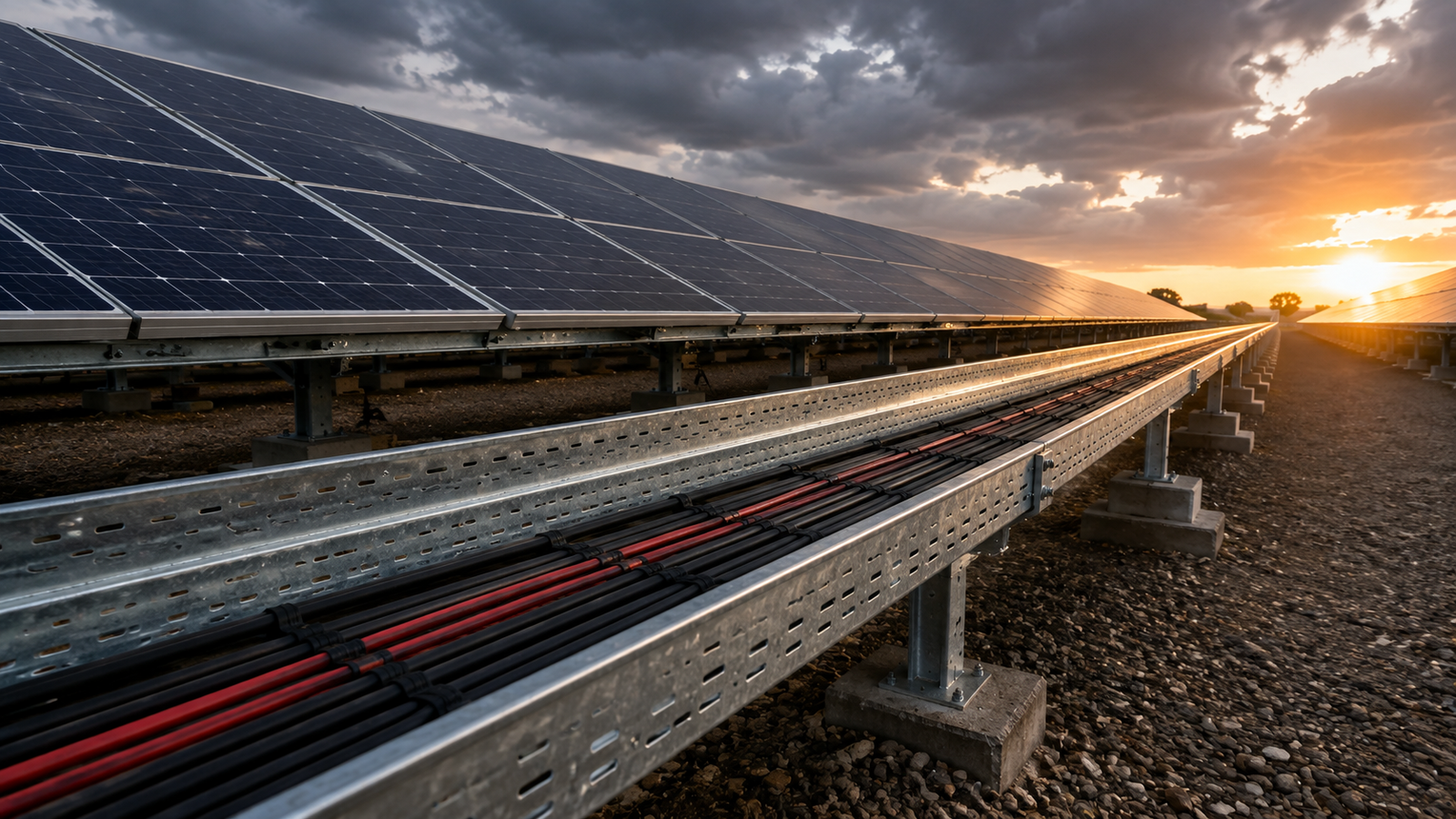
Cable management rarely gets the spotlight in solar project discussions, yet the humble cable tray plays a far bigger safety role than most people realize. Every solar plant relies on extensive cabling to connect panels, combiner boxes, and inverters across large distances, and how that cabling is physically supported and protected directly affects system reliability. Choosing the right Solar Cable Tray Manufacturer is not a minor procurement decision, it is a safety decision with consequences that surface years into a plant’s operational life. Why Does Cable Tray Quality Matter So Much In Solar Installations ? Solar cabling operates outdoors, exposed to sun, moisture, and temperature swings for decades, conditions that test material quality far more than typical indoor cable management. → Poor quality trays corrode faster, eventually compromising cable protection → Inadequate load capacity can cause sagging, stressing cable insulation over time → Improperly designed trays create pinch points that damage cable sheathing during installation What Should A Genuine Solar Cable Tray Actually Provide ? Not every cable tray on the market is engineered with outdoor solar applications specifically in mind. → Corrosion resistant finish suited to prolonged outdoor exposure → Adequate load bearing capacity for the specific cable volume and weight involved → Smooth edges and construction that prevent cable insulation damage during and after installation How Does Cable Tray Failure Actually Create Safety Risk ? A failing cable tray does not usually cause immediate, dramatic failure, the risk builds gradually and often invisibly. → Sagging or corroded trays can allow cables to rest against sharp edges over time → Damaged cable insulation increases risk of short circuits or fire hazards → Exposed or poorly supported cabling becomes more vulnerable to rodent damage and environmental wear Myths And Facts About Solar Cable Trays Myth : Any galvanized cable tray works fine for outdoor solar installations. Fact : Galvanizing quality varies significantly between manufacturers, and inadequate coating leads to premature corrosion in exposed solar environments. Myth : Cable tray selection is purely a cost consideration with no safety impact. Fact : Tray quality directly affects cable protection over the plant’s lifetime, making it a safety consideration as much as a budget one. Myth : Perforated and ladder type trays are interchangeable for any application. Fact : Each type suits different cable loads and installation contexts, and the wrong choice can affect both performance and long-term durability. What Should Project Teams Verify Before Selecting A Supplier ? A few direct questions can reveal whether a manufacturer genuinely understands solar-specific requirements. → Ask about galvanizing thickness and corrosion resistance testing → Confirm load bearing specifications match the actual cable volume planned → Request references from previous solar installations, not just general industrial projects Before You Choose, Here Is What Most Buyers Ask First : What is the difference between perforated and ladder type cable trays for solar use ? → Perforated trays suit lighter cable loads with added protection, while ladder type trays handle heavier loads with better ventilation and heat dissipation. How often should cable trays be inspected after installation ? → An annual visual inspection helps catch early signs of corrosion, sagging, or damage before they affect cable integrity. Does cable tray material really affect solar plant safety in the long run ? → Yes, since cable protection directly influences the risk of insulation damage, short circuits, and fire hazards over the plant’s operational life. Every Cable In Your Plant Is Only As Safe As The Tray Supporting It : Cable trays may sit quietly in the background of a solar installation, but their quality directly shapes how safely and reliably that plant operates for decades. As a leading manufacturer of earthing, grounding and lightning protection solutions in Pune, U-Protec manufactures cable trays engineered for the specific demands of solar installations, giving project teams a foundation of protection that holds up long after installation day.
Understanding The Solar Power Plant Earthing System : A Complete Guide
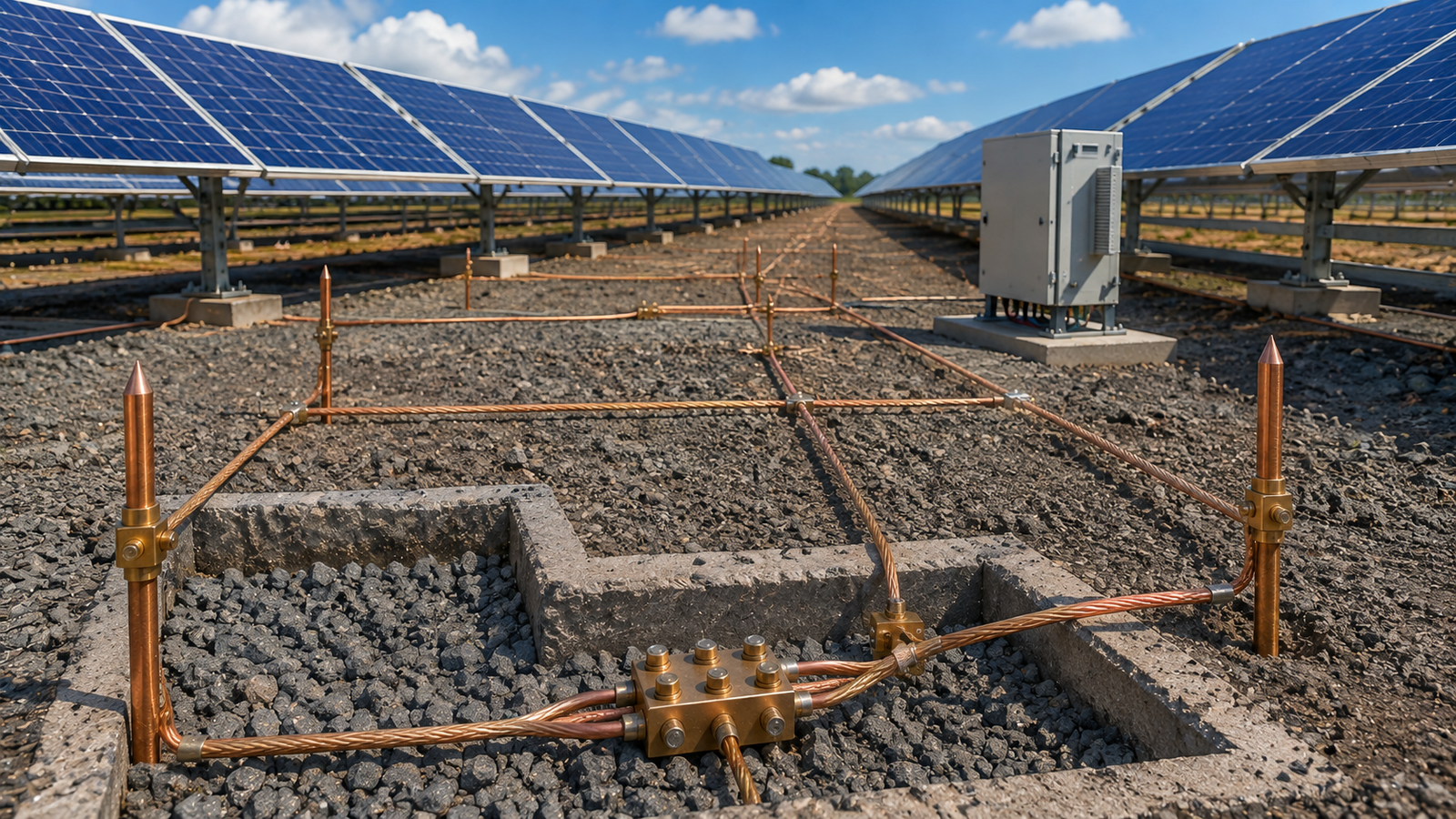
A solar power plant is not one machine, it is a network of interconnected components, panels, inverters, transformers, mounting structures, and cabling, all working together across a large physical footprint. Every one of these components needs protection from fault currents and lightning induced surges, and that protection depends entirely on how well the overall Solar Power Plant Earthing System has been designed. Treating earthing as a single component rather than an integrated system is one of the most common and costly mistakes in solar project planning. Why Does A Plant Need A System Rather Than Just A Few Electrodes ? A large solar installation spans significant area, with multiple structures, inverter stations, and cabling routes, each needing proper connection to a common earthing network. → Isolated, disconnected electrodes create inconsistent fault current paths → A properly designed system links structural earthing, equipment earthing, and lightning protection together → Without integration, one part of the plant can remain vulnerable even if another part is well protected What Are The Core Components Of A Complete Earthing System ? A functioning system typically brings together several distinct elements, each serving a specific protective role. → Structural earthing for mounting frames and support structures → Equipment earthing for inverters, transformers, and control panels → Lightning protection systems for exposed elevated components → A common earthing grid or mesh connecting these elements together reliably How Should Earthing Design Actually Begin For A New Plant ? Earthing design is not something to finalize after construction begins, it needs to start at the planning stage alongside the electrical layout itself. → Soil resistivity testing across the site informs electrode type and placement → Layout planning should account for equipment locations and lightning exposure points → Design should anticipate future expansion, not just the current installation scope Myths And Facts About Solar Power Plant Earthing Systems Myth : Earthing individual components separately is just as effective as an integrated system. Fact : Disconnected earthing points can create uneven fault current paths, leaving some equipment less protected than others during a fault event. Myth : Earthing system design only matters for very large utility scale plants. Fact : Even smaller commercial installations benefit significantly from proper system design, since exposure risk does not scale down proportionally with plant size. Myth : Once installed, an earthing system requires no further evaluation. Fact : Periodic resistance testing and inspection remain necessary, since soil conditions and connections can change measurably over years of operation. What Role Does Ongoing Maintenance Play In System Reliability ? An earthing system is not a install-and-forget component, its performance can shift gradually over the life of the plant. → Annual resistance testing helps identify gradual degradation early → Physical inspection of accessible connections catches corrosion or loosening before failure → Documentation of testing results supports long-term plant maintenance records Before You Choose, Here Is What Most Buyers Ask First : Does every solar plant need the same earthing system design ? → No, design should reflect site-specific soil conditions, plant layout, and equipment placement, rather than following a fixed template. How is structural earthing different from equipment earthing ? → Structural earthing protects mounting frames and support structures, while equipment earthing specifically protects inverters, transformers, and control systems. Can an existing plant retrofit a more complete earthing system later ? → In many cases yes, though retrofitting is more complex than incorporating proper design from the initial planning stage. A Plant Is Only As Protected As Its Weakest Earthing Connection : A solar power plant earthing system succeeds or fails as a whole, not component by component, which is why integrated design matters more than any single electrode choice. As a leading manufacturer of earthing, grounding and lightning protection solutions in Pune, U-Protec supports project teams with earthing components engineered to work together as a complete, reliable system, not a collection of disconnected parts.
PM KUSUM Solar Pump Earthing : What Every Farmer And Installer Should Know ?
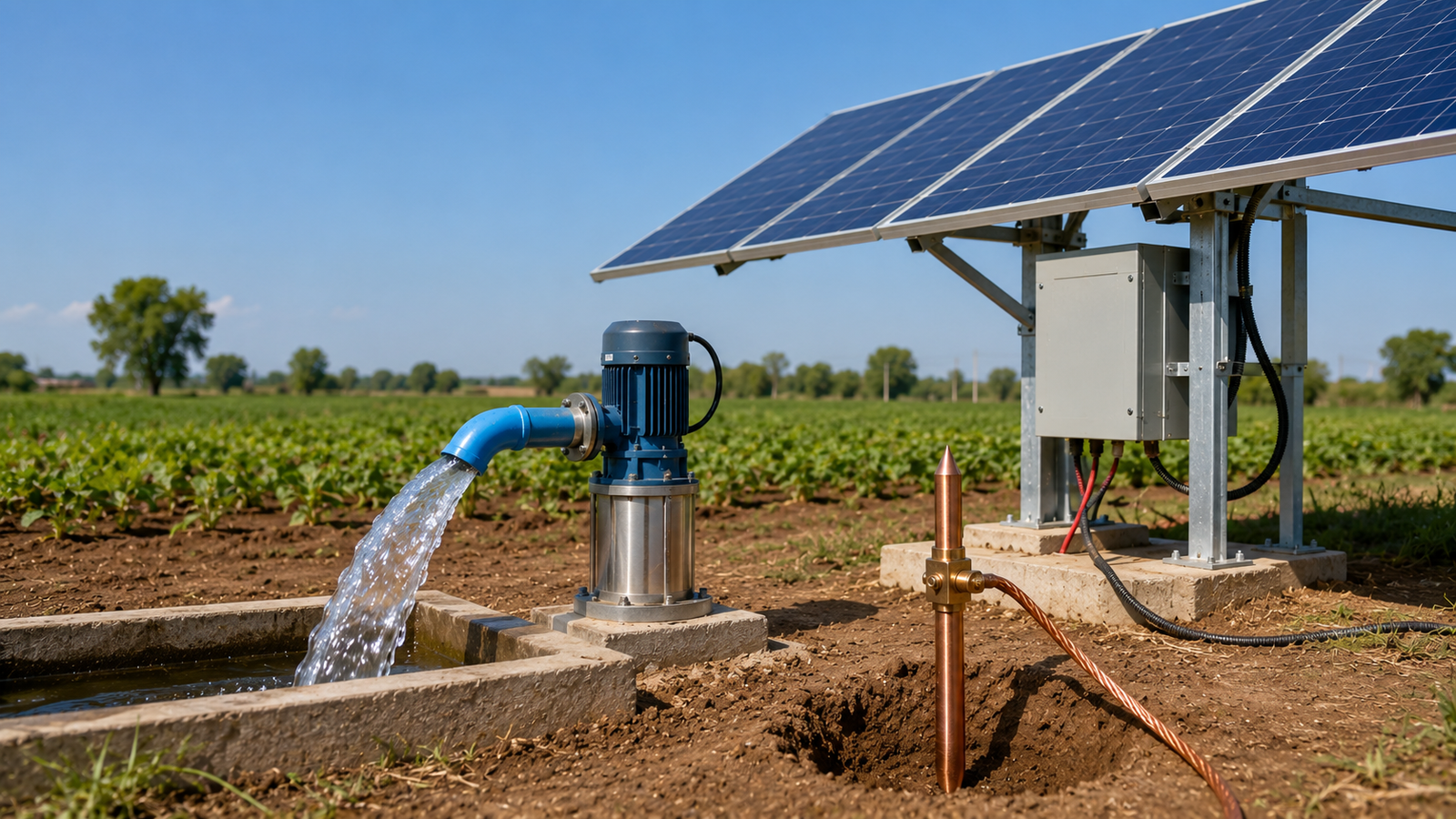
The PM KUSUM scheme has brought solar powered irrigation to thousands of farms across India, changing how millions of farmers access reliable power for their pumps. Amid the excitement around subsidies, pump capacity, and energy savings, one critical safety element rarely gets explained in plain terms to the people actually living with the installation. PM KUSUM Solar Pump Earthing protects not just the equipment, but the farmer operating it every single day. Why Should A Farmer Personally Care About Earthing ? For most farmers, electrical systems are unfamiliar territory, and earthing can sound like a technical detail best left to installers. In reality, it directly affects personal safety. → Proper earthing prevents dangerous voltage from appearing on metal pump components → A poorly earthed system increases shock risk during routine operation or maintenance → Earthing quality determines whether the pump survives a lightning event or requires costly replacement What Should Installers Explain To Farmers Before Installation ? Farmers are the ones who will operate and live alongside this system for years, and clear communication at installation time prevents confusion later. → Why the earthing pit exists and why it should never be disturbed or covered permanently → What warning signs, such as visible corrosion or a damaged pit cover, mean the system needs inspection → Who to contact if the pump develops unusual behavior that might indicate an earthing issue What Makes Earthing For Agricultural Pump Systems Different ? Farm environments present specific conditions that installers need to account for beyond a standard residential or commercial earthing approach. → Soil around pump installations often experiences significant moisture variation from irrigation itself → Limited access to trained electricians in rural areas means the system must be robust with minimal intervention → Pump motors represent a meaningful financial investment for the farmer, making protection quality directly tied to livelihood Myths And Facts About PM KUSUM Solar Pump Earthing Myth : If the pump works fine, the earthing must be fine too. Fact : Earthing systems can degrade gradually without any visible effect on day to day pump operation, until a fault event exposes the weakness. Myth : Earthing pits do not need to be checked once the system is running. Fact : Periodic checks, especially after monsoon season, help confirm the pit and connections remain in good condition. Myth : All installers under PM KUSUM follow the same earthing standard. Fact : Installation quality varies between installers, making it worthwhile for farmers to ask specifically about the earthing kit being used. What Should A Farmer Look For After Installation Is Complete ? A few simple, non-technical checks can help a farmer stay aware of their system’s condition over time. → The earthing pit cover should remain intact and accessible, not buried or damaged → Any unusual tingling sensation when touching metal pump components should be reported immediately → Annual inspection by a qualified technician helps catch problems before they become dangerous Before You Choose, Here Is What Most Buyers Ask First : Is earthing included by default in every PM KUSUM solar pump installation ? → It should be, though quality and completeness can vary, making it worth confirming directly with the installer. What should a farmer do if they suspect an earthing problem ? → Avoid touching metal components and contact the installer or a qualified electrician for inspection as soon as possible. Does earthing require any special care during the monsoon season ? → Soil moisture changes significantly during monsoon, making post-monsoon inspection a good practice for long-term reliability. A Farmer Should Never Have To Guess Whether Their Pump Is Safe To Touch : PM KUSUM has made solar powered irrigation accessible to farmers across the country, and proper earthing is what keeps that access genuinely safe over the long term, not just on installation day. As a leading manufacturer of earthing, grounding and lightning protection solutions in Pune, U-Protec manufactures earthing kits engineered specifically for the realities of agricultural installations, giving farmers and installers a dependable foundation they can trust.
How To Choose A Reliable Solar Earthing Electrode Manufacturer ?
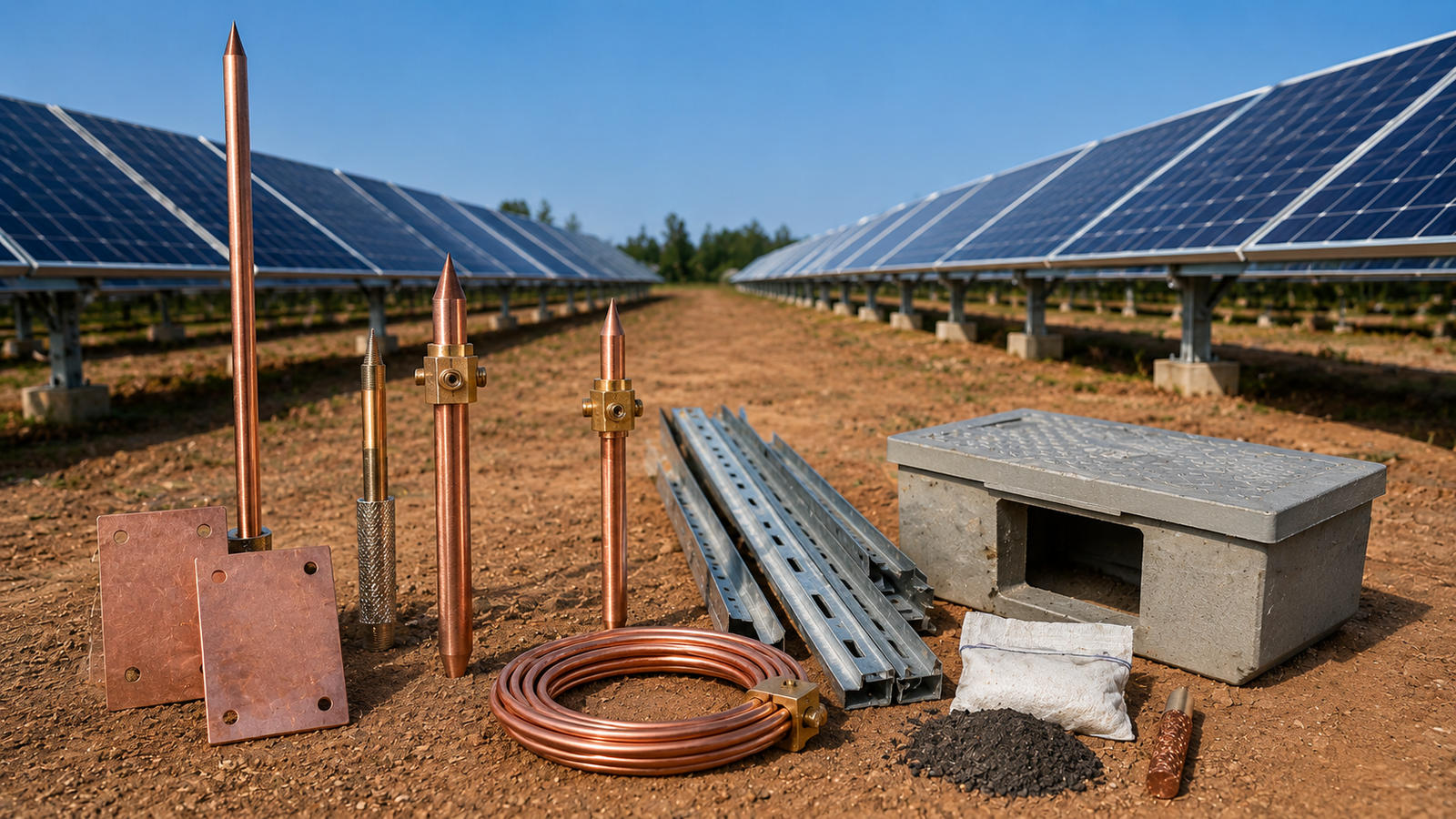
Every solar installation depends on a chain of components working together, and the earthing electrode sits at the very foundation of that chain, quite literally buried beneath the ground where nobody sees it. Yet this single component decides how safely a plant handles fault currents and lightning discharge for decades. Choosing the right Solar Earthing Electrode Manufacturer is one of those decisions that rarely gets attention during planning, but always gets attention when something goes wrong. Why Does The Electrode Matter More Than Most People Assume ? The electrode is the physical point of contact between the entire electrical system and the earth itself. Its material, construction, and installation quality directly determine how effectively fault current disperses safely into the ground. → A poor quality electrode corrodes faster, weakening the connection over years → Inconsistent manufacturing leads to unpredictable resistance values across a project → The electrode cannot be inspected easily once installed, making the initial choice critical What Separates A Genuine Manufacturer From A Trader ? Many suppliers in this space are simply reselling electrodes manufactured elsewhere, often without full visibility into the production process themselves. → A genuine manufacturer controls raw material sourcing and quality directly → In-house production allows batch-level consistency and traceability → Traders typically cannot answer detailed technical questions about the manufacturing process itself How Should Electrode Material Selection Actually Work ? Not every project needs the same electrode type, and a manufacturer who understands this will ask questions before recommending a product. → Copper bonded electrodes suit high corrosion risk or high conductivity requirements → GI electrodes offer a practical, cost effective option for standard soil conditions → Soil resistivity testing, where available, should guide the final material decision Myths And Facts About Solar Earthing Electrodes Myth : All copper bonded electrodes are essentially the same. Fact : Bonding thickness and process quality vary significantly between manufacturers, directly affecting long-term corrosion resistance and lifespan. Myth : A thicker electrode always performs better. Fact : Performance depends on proper bonding, correct installation depth, and backfill compound quality, not diameter alone. Myth : Electrode manufacturing quality cannot really be verified before purchase. Fact : Reputable manufacturers provide test certificates, batch documentation, and are willing to share their manufacturing process transparently. What Questions Actually Reveal Manufacturing Quality ? A short conversation with a supplier often reveals more than any brochure. → Ask directly whether the electrodes are manufactured in-house or sourced externally → Request resistance testing data or certification for recent batches → Ask how they handle quality control during the bonding or galvanizing process Before You Choose, Here Is What Most Buyers Ask First : What is the typical lifespan of a properly manufactured earthing electrode ? → A well manufactured copper bonded electrode can last several decades, provided installation and backfill compound quality are also maintained correctly. Can electrode quality be tested after installation ? → Direct inspection is difficult once buried, which is why resistance testing at regular intervals is used to monitor ongoing performance instead. Does electrode manufacturing quality really affect solar plant safety ? → Yes, since the electrode is the final point of fault current dispersal, inconsistent quality directly increases risk during electrical faults or lightning events. The Ground Beneath Your Plant Only Works As Well As What You Bury In It : The earthing electrode may be invisible once installed, but its manufacturing quality quietly determines how safely a solar plant operates for its entire lifetime. As a leading manufacturer of earthing, grounding and lightning protection solutions in Pune, U-Protec manufactures electrodes in-house with documented quality control, so project teams are not simply trusting a brochure, they are trusting a verifiable process.
Do You Really Need A Dedicated Lightning Arrester For Solar Plant ?
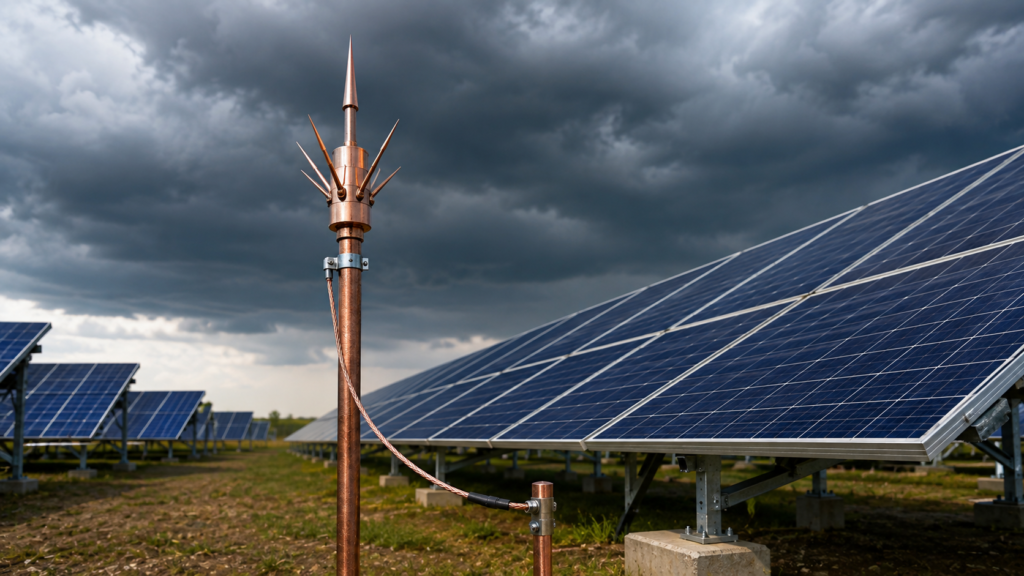
Solar installations sit in some of the most lightning exposed positions imaginable, elevated structures, open terrain, and often the tallest points across an otherwise flat landscape. Yet many project teams assume standard earthing alone provides sufficient protection against lightning strikes. This assumption overlooks a critical distinction. A Lightning Arrester For Solar Plant serves a different, specific purpose that general earthing systems are not designed to fully address on their own. Why Is Lightning Risk Different For Solar Installations Specifically ? Solar plants combine several factors that increase lightning exposure compared to typical structures. → Elevated mounting structures and inverter stations create natural strike points → Large open sites, often in rural or semi urban areras, lack surrounding structures for natural shielding → Extensive cabling networks can carry induced surges across wide areas of the plant if not properly protected How Is A Lightning Arrester Different From Standard Earthing ? These two systems work together but address different aspects of electrical protection. → Earthing systems safely disperse fault current from equipment into the ground → Lightning arresters intercept a direct strike before it reaches sensitive equipment → Both systems need to be properly integrated, since a lightning arrester without effective earthing cannot safely discharge the current it intercepts What Should Be Considered When Selecting A System For A Solar Site ? Not every site requires the same lightning protection approach, and several factors influence the right choice. → Site elevation and surrounding terrain affect overall strike probability → Plant footprint determines how many arrester points are needed for adequate coverage → Regional lightning frequency data can inform the level of protection appropriate for the investment Myths And Facts About Lightning Protection For Solar Plants Myth : Standard earthing alone provides adequate lightning protection. Fact : Earthing manages fault current dispersal, while a dedicated lightning arrester specifically intercepts and manages direct strikes, a distinct and necessary function. Myth : Lightning arresters are only necessary for very large utility scale installations. Fact : Even smaller rooftop or ground mounted systems in lightning prone regions benefit meaningfully from dedicated protection. Myth : One arrester provides protection for an entire large plant. Fact : Coverage area depends on arrester type and installation height, larger plants typically require multiple strategically placed units for complete protection. What Happens When Lightning Protection Is Inadequate Or Missing ? The consequences of a direct strike without proper protection extend well beyond a single damaged panel. → Induced surges can travel through cabling and damage inverters and control systems → Repair costs and plant downtime following a strike often far exceed the cost of proper protection → Insurance claims can become complicated without documented protection systems in place Before You Choose, Here Is What Most Buyers Ask First : Does every solar installation legally require a lightning arrester ? → Requirements vary by region and project scale, though it is widely considered best practice regardless of strict legal mandate. How does an ESE arrester differ from a conventional lightning arrester ? → ESE arresters are designed to trigger earlier, offering a wider protection radius compared to conventional rod based systems. Can lightning protection be added to an existing operational solar plant ? → Yes, in most cases lightning arresters can be retrofitted without disrupting ongoing plant operations significantly. Lightning Does Not Wait For A Plant To Be Fully Insured Or Fully Protected : A solar plant represents a substantial long-term investment, and dedicated lightning protection is one of the more overlooked ways to safeguard that investment against a single, sudden event. As a leading manufacturer of earthing, grounding and lightning protection solutions in Pune, U-Protec manufactures lightning arresters engineered specifically for the exposure conditions solar installations face, closing a gap that standard earthing alone cannot fully cover.
Copper Bonded Earthing Rod For Solar : Why It Is The Preferred Choice ?
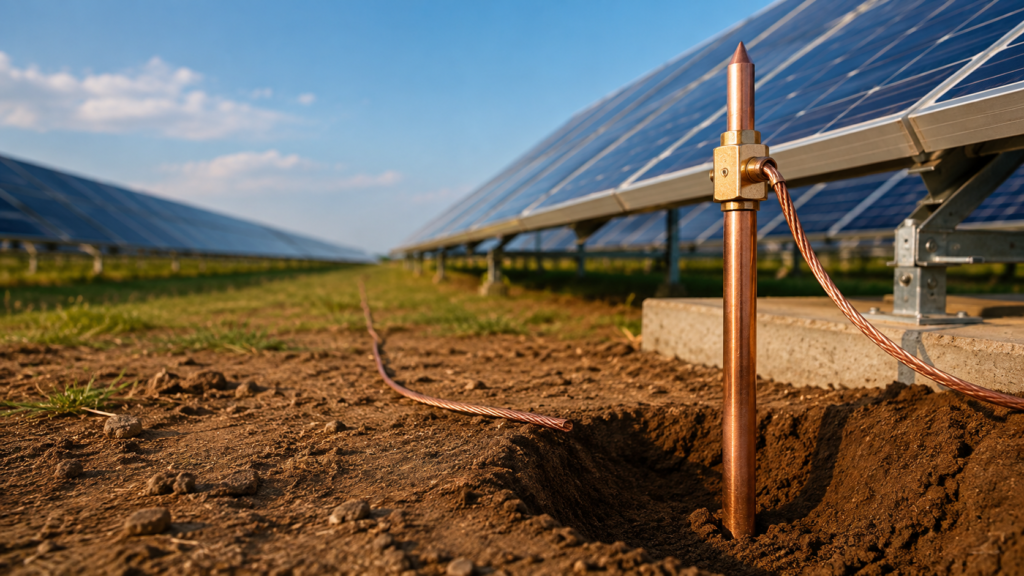
Ask any experienced solar installer why they favor copper bonded rods over other electrode types, and the answer usually comes down to one word : reliability. Solar plants are exposed installations, sitting under open sky for decades, and the earthing system beneath them has no room for gradual failure. The Copper Bonded Earthing Rod For Solar has become the preferred choice across the industry precisely because it addresses the two biggest long-term risks in earthing systems, corrosion and inconsistent conductivity. What Actually Makes Copper Bonded Construction Different ? A copper bonded rod is not simply a copper coated rod. It uses a molecular bonding process that fuses copper onto a steel core, creating a connection that resists separation over time. → The steel core provides mechanical strength for driving into varied soil types → The copper layer provides superior conductivity and corrosion resistance → Proper bonding prevents the copper layer from peeling or flaking during installation or over time Why Does Corrosion Resistance Matter So Much For Solar Installations ? Solar plants often sit in open, exposed terrain with fluctuating moisture levels across seasons, conditions that accelerate corrosion in lower quality electrodes. → Corroded electrodes lose conductivity gradually, often without visible warning signs → Reduced conductivity directly compromises fault current dispersal during electrical faults → Copper bonded construction significantly slows this degradation compared to plain GI rods in corrosive soil How Does This Compare To Other Electrode Options Available ? Project teams often ask why they should pay more for copper bonded rods when cheaper alternatives exist in the market. → GI rods remain a valid, cost effective option for standard, low corrosion soil conditions → Copper bonded rods offer stronger long-term performance in high moisture or corrosive soil → The right choice depends on site-specific soil testing, not a blanket preference either way Myths And Facts About Copper Bonded Earthing Rods Myth : Copper bonded rods are only necessary for large industrial installations. Fact : Solar installations of any size benefit from corrosion resistant electrodes, since exposure conditions remain similar regardless of plant scale. Myth : Higher copper content always means better performance. Fact : Bonding quality and process consistency matter more than copper thickness alone, since poor bonding leads to premature separation regardless of copper volume. Myth : Copper bonded rods never require any maintenance. Fact : Periodic resistance testing remains important, since installation quality, soil changes, and connection integrity all still affect long-term performance. What Should Buyers Actually Verify Before Purchasing ? Not all copper bonded rods sold in the market meet the same manufacturing standard, despite looking similar on the surface. → Ask for documentation on the bonding process and copper thickness used → Request test certificates confirming resistance and conductivity values → Confirm the manufacturer produces the rods in-house rather than reselling an unverified product Before You Choose, Here Is What Most Buyers Ask First : How long does a copper bonded earthing rod typically last in solar installations ? → With proper installation and backfill compound, a quality copper bonded rod can reliably perform for several decades in most soil conditions. Is copper bonded always necessary, or can GI work just as well ? → It depends on soil corrosivity, GI performs adequately in low corrosion soil, while copper bonded is preferred where moisture and corrosion risk are higher. Does the bonding process really affect long-term performance ? → Yes, poor bonding can cause the copper layer to separate over time, effectively reducing the electrode to bare steel underground. The Right Electrode Choice Today Prevents The Failure You Will Never See Coming : Choosing a copper bonded earthing rod is not about paying for a premium label, it is about selecting a component engineered to withstand exactly the conditions a solar installation will face for decades. As a leading manufacturer of earthing, grounding and lightning protection solutions in Pune, U-Protec manufactures copper bonded rods in-house with verified bonding quality, giving project teams a dependable foundation for their solar earthing system.
What Makes a Trusted Earthing Accessories Manufacturer in Pune the Foundation of a Safe Electrical System ?
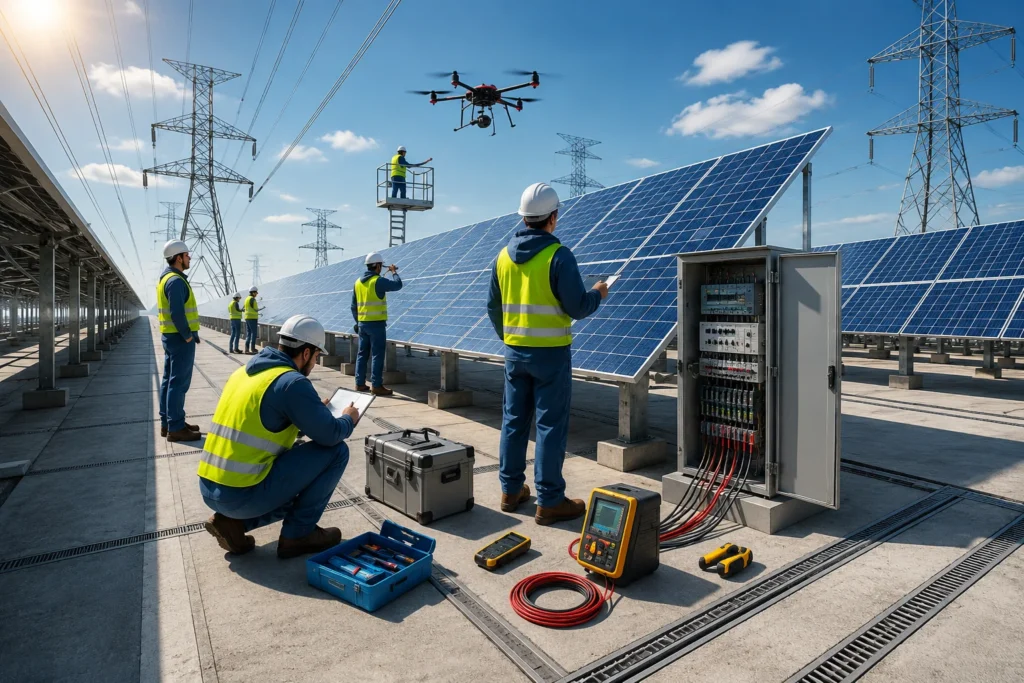
A grounding system is only as reliable as every component within it. The electrode gets most of the attention but without the right earthing accessories manufacturer in Pune supplying verified backfill compounds, earth pit covers, strips, and connectors, even the best electrode will underperform. U-Protec Group manufactures the complete range of earthing components including CPRI tested pure copper earthing electrodes that electrical engineers and project teams across India specify when the entire system needs to be right, not just parts of it. 99.9% pure copper electrodes — CPRI tested for verified performance Pipe in strip design with highly conductive non-corrosive fill Available in diameters of 14mm, 17.2mm, 25mm, 32mm, 50mm, and 80mm Lengths of 1, 2, and 3 metres for standard and deep installation requirements Zero maintenance after installation — no watering, no resistance correction Why Does a Complete Earthing Accessories Manufacturer in Pune Matter More Than a Single Product Supplier? Sourcing electrodes from one supplier, backfill compound from another, and earth pit covers from a third creates inconsistency in quality, compatibility, and accountability. A complete manufacturer eliminates that risk entirely. Single source accountability for the entire earthing system Component compatibility verified at the manufacturing stage Pure copper electrodes paired with the right accessories deliver system-level performance Reduced procurement complexity for contractors and project managers Consistent quality standard across every component in the installation Which Industries Depend on Complete Earthing Solutions from U-Protec? Industries where grounding system integrity is a safety and regulatory non-negotiable consistently specify U-Protec across their projects. Electrical contractors and industrial installations Cement, sugar, and paper manufacturing plants Petrol and chemical processing facilities Electrical equipment manufacturing units Construction and infrastructure projects Myths and Facts About Earthing Accessories: Myth: The electrode is the only component that matters in an earthing system. Fact: Backfill compound, earth pit covers, strips, and connectors all directly affect the long-term ground resistance and system reliability. A poor accessory can compromise an excellent electrode. Myth: Any backfill compound works with any earthing electrode. Fact: Backfill compound must be matched to soil conditions and electrode material. The wrong compound can accelerate corrosion or fail to reduce ground resistance as intended. Myth: Pure copper electrodes and copper bonded electrodes perform identically. Fact: Pure copper offers the highest conductivity and corrosion resistance of any earthing material. In high-criticality or chemically aggressive environments, pure copper outperforms bonded alternatives over the long term. Frequently Asked Questions What is the difference between pure copper and copper bonded earthing electrodes? → Pure copper electrodes are solid 99.9% electrolytic copper throughout offering the highest conductivity and corrosion resistance available. Copper bonded electrodes use a steel core with a molecularly bonded copper coating. Pure copper is specified for the most demanding environments where long-term performance cannot be compromised. What earthing accessories does U-Protec manufacture alongside electrodes? → U-Protec manufactures the complete range GI and copper earthing strips, earth pit covers, silver backfill compounds, copper and GI plates, and a full range of lightning protection components. This makes U-Protec a single-source supplier for the entire earthing and lightning protection system. Are U-Protec pure copper earthing electrodes CPRI tested? → Yes. U-Protec’s pure copper earthing electrodes are CPRI tested independently verified by India’s Central Power Research Institute for electrical performance, fault current handling, and material quality. This is the benchmark standard that separates verified manufacturer performance from unverified market claims. When Every Component Is Right, the System Never Fails An earthing system is not just an electrode in the ground — it is a network of verified components working together under fault conditions that can occur at any time. U-Protec Group, a trusted BFC backfill compound manufacturer in Pune and complete earthing accessories manufacturer, gives electrical engineers and procurement teams the confidence that every component in their grounding system from electrode to earth pit cover is manufactured to the same uncompromising standard.
Why Copper Bonded Earthing Electrodes Are the Smarter Grounding Choice for Modern Electrical Systems ?
Every electrical system is only as safe as its grounding. Copper bonded earthing electrodes have become the industry benchmark for fault current dissipation and for good reason. U-Protec Group, a CPRI-tested manufacturer based in Pune, delivers molecularly bonded electrodes built to perform in the most demanding soil conditions and industrial environments across India and beyond. CPRI tested for verified electrical performance 99.9% pure electrolytic copper molecularly bonded to low carbon steel core Available in 50, 100, and 250 micron coating thicknesses Standard and V-shape designs for versatile installation requirements What Makes Copper Bonded Earthing Electrodes Technically Superior? The performance of an earthing electrode comes down to three things conductivity, corrosion resistance, and mechanical strength. Copper bonded electrodes address all three simultaneously. The low carbon steel core provides high tensile strength for deep-driven installations Molecular bonding ensures the copper layer does not crack, peel, or separate under stress 99.9% electrolytic copper delivers excellent conductivity with lowest resistance to ground Corrosion resistant surface eliminates the risk of electrolysis even in chemically aggressive soils Where Are Copper Bonded Earthing Electrodes Used? These electrodes are specified across industries where grounding failure is simply not an option. Power substations and distribution networks Cement, sugar, paper, and chemical manufacturing plants Petrol and petroleum processing facilities Telecom towers and data infrastructure Railway and transportation systems Defence and military installations Myths and Facts About Earthing Electrodes: Myth: GI earthing electrodes perform just as well as copper bonded ones. Fact: GI electrodes corrode significantly faster in aggressive or moisture-rich soils, leading to increased ground resistance over time. Copper bonded electrodes maintain consistent low resistance throughout their service life. Myth: Higher micron coating always means better performance. Fact: The right micron thickness depends on soil corrosivity, installation depth, and application type. 50 micron works for standard conditions, while 250 micron is specified for chemically aggressive environments. Choosing correctly matters more than simply going thicker. Myth: Copper bonded electrodes require regular maintenance after installation. Fact: A correctly installed copper bonded earthing electrode from a quality manufacturer requires zero maintenance. The molecular bond ensures long-term performance without intervention. Myth: All copper bonded electrodes in the market meet the same quality standard. Fact: Quality varies significantly across manufacturers. CPRI testing is the benchmark that separates verified performance from unverified claims and not every supplier can produce CPRI-tested electrodes. Frequently Asked Questions : What are copper bonded earthing electrodes and how do they work? → Copper bonded earthing electrodes are grounding rods made from a low carbon steel core uniformly coated with 99.9% pure electrolytic copper through a molecular bonding process. They provide a low-resistance path for fault currents and lightning surges to safely dissipate into the earth, protecting both equipment and personnel. What is the difference between 50, 100, and 250 micron copper bonded electrodes? → The micron rating refers to the thickness of the copper coating on the steel core. 50 micron is suitable for standard soil conditions. 100 micron offers enhanced corrosion resistance for moderately aggressive environments. 250 micron is specified for highly corrosive soils, coastal areas, and chemically active industrial sites where long-term performance is critical. Why is CPRI testing important when selecting an earthing electrode? → CPRI — the Central Power Research Institute — is India’s premier independent testing authority for electrical equipment. A CPRI-tested electrode has been independently verified for its electrical performance, fault current handling, and material quality. It is the most reliable indicator that a product will perform as specified under real operating conditions. What industries require copper bonded earthing electrodes? → Any industry where electrical safety and equipment protection are non-negotiable — including power generation, petrochemicals, cement, telecommunications, railways, defence, and construction. U-Protec supplies to all of these sectors with electrodes manufactured to IS standards and tested for consistent performance. What sizes and configurations does U-Protec offer for copper bonded earthing electrodes? → U-Protec manufactures copper bonded earthing electrodes in lengths of 1, 2, and 3 metres, and in diameters of 14mm, 17.2mm, 25mm, and 32mm. Both standard and V-shape rod designs are available, with copper coating options of 50, 100, and 250 microns to match specific project and soil requirements. Grounding Is Not Where You Cut Costs !!! In electrical system design, every component has a tolerance for compromise except the earthing. A failed grounding system does not just trip a breaker. It puts equipment, infrastructure, and lives at risk. U-Protec Group, a trusted copper bonded earthing electrode manufacturer with a proven track record across industrial, infrastructure, and defence projects, builds electrodes that are engineered to the standard your system actually demands. Because when fault current needs somewhere to go, the ground beneath your feet needs to be ready.
Why Defence and Telecom Engineers Trust a Copper Bonded Earthing Electrode Manufacturer in Pune Like U-Protec?
When the application involves missile components, nuclear materials storage, or critical telecom infrastructure, the grounding solution cannot be an afterthought. A trusted Copper Bonded Earthing Electrode Manufacturer in Pune like U-Protec Group brings the precision, material quality, and manufacturing consistency that safety-critical installations demand. U-Protec’s copper earthing plates are engineered for maximum conductivity, long service life, and reliable performance in the most challenging environments across India and beyond. Pure copper construction for exceptional electrical conductivity Available in 300x300mm and 600x600mm in 3mm and 6mm thickness High corrosion resistance for long-term grounding performance Fast and easy on-site installation with minimal space requirement Trusted by defence, telecom, and nuclear sector procurement teams What Makes a Copper Bonded Earthing Electrode Manufacturer in Pune the Right Choice? Copper is the benchmark material for grounding in high-criticality applications — and for good reason. No other material matches its combination of conductivity, corrosion resistance, and long-term stability under fault current stress. Pure copper delivers the lowest ground resistance of any earthing material Corrosion resistance ensures consistent performance across decades without degradation Robust plate construction handles high fault current dissipation without structural failure Suitable for both surface burial and deep installation depending on site requirements Manufactured to the highest industry standards with quality verified at every stage Where Are Copper Earthing Plates Most Critically Specified? These are not general-purpose grounding solutions. They are specified where failure is simply not acceptable. Missile component manufacturing and storage facilities Defence and military installations across India Nuclear materials storage and processing environments Telecommunications towers and critical communication infrastructure High-value industrial and power generation assets Myths and Facts About Copper Earthing Plates: Myth: Copper earthing plates and GI plates perform the same in high-criticality applications. Fact: Copper delivers significantly lower ground resistance and superior corrosion resistance compared to GI. In defence, nuclear, and telecom applications, this difference is not marginal — it is the difference between a safe installation and a compromised one. Myth: Thicker copper plates always mean better performance. Fact: The right thickness depends on the fault current magnitude, soil conditions, and application type. U-Protec offers 3mm and 6mm options specifically to match the specification requirement of each project. Myth: Copper earthing plates are too expensive to justify over alternatives. Fact: In safety-critical applications, the cost of a grounding failure far exceeds any upfront material saving. Copper earthing plates from a verified manufacturer are a long-term investment in installation safety and regulatory compliance. Frequently Asked Questions What sizes does U-Protec offer for copper earthing plates? → U-Protec manufactures copper earthing plates in 300x300mm and 600x600mm, each available in 3mm and 6mm thickness. The size and thickness are selected based on the fault current requirement and specific application of the installation. Are copper earthing plates suitable for defence and nuclear applications? → Yes. U-Protec’s copper earthing plates are specifically used in missile component facilities, defence-related applications, and nuclear materials storage environments where grounding reliability is non-negotiable and material quality must meet the highest standards. How do copper earthing plates compare to GI plates for industrial grounding? → Copper provides significantly lower electrical resistance and far superior corrosion resistance compared to GI. For general industrial use, GI may suffice — but for high-criticality, long-service-life, or chemically aggressive environments, copper is the only material that meets the specification. When the Stakes Are High, the Grounding Standard Has to Match There are installations where the earthing system is the last line of defence between operational safety and catastrophic failure. For those installations, U-Protec Group a leading Chemical earthing electrode manufacturer in Pune and copper earthing plate manufacturer trusted by defence, nuclear, and telecom sectors delivers grounding solutions built to a standard that matches the seriousness of the application. Because in high-criticality environments, the ground beneath your installation needs to be engineered, not just installed.