
How to Design and Install a Solar Panel Earthing System: A Complete Guide
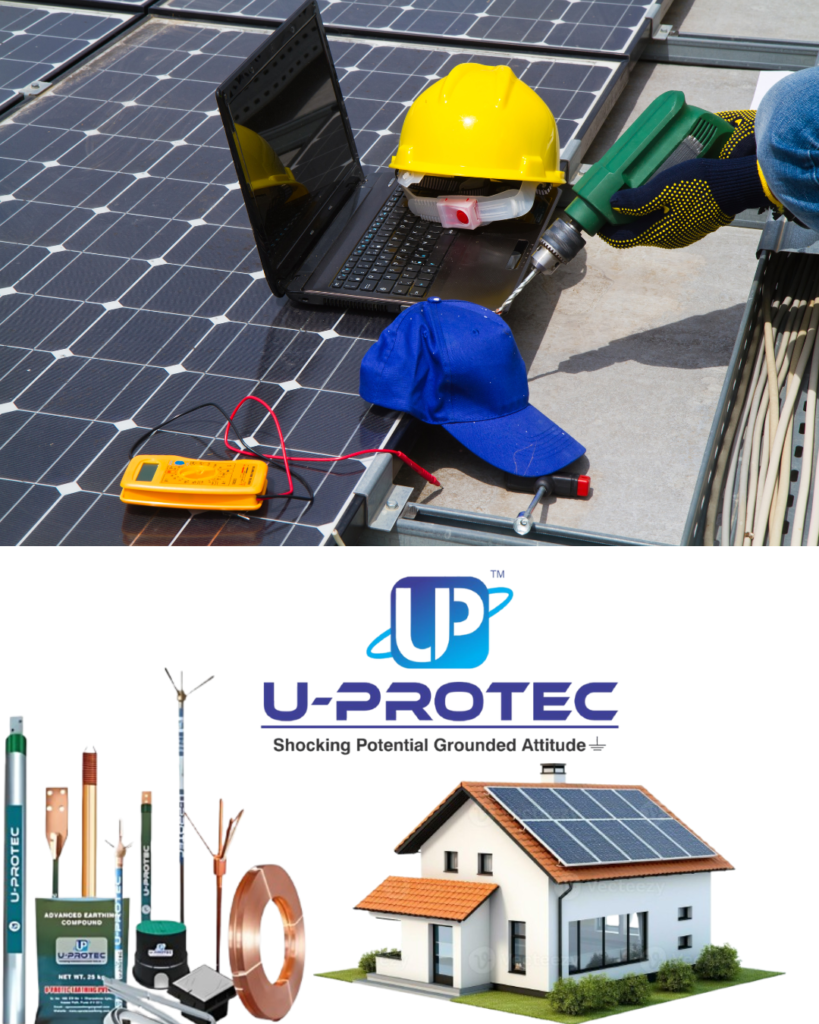
How to Design and Install a Solar Panel Earthing System: A Complete Guide Introduction A solar panel earthing system is a vital component of every solar power installation. It ensures safety, protects equipment from electrical surges, and maintains system performance over time. Whether you’re setting up a solar system for a home, business, or industrial plant, grounding your panels properly can prevent costly damage. In this guide, we’ll walk you through everything you need to know about designing and installing an effective solar panel earthing system. What is a Solar Panel Earthing System? It is a protective setup that connects the non-current carrying parts of solar panels, inverters, and other components to the ground. The main purpose is to safely divert fault current or lightning surges into the earth, minimizing the risk of electric shocks and fire. In simple terms, earthing = safety + system protection. Why is Solar Earthing Necessary? Here are the key reasons for installing a proper earthing system: Protection from lightning surges Avoiding electric shock hazards Compliance with electrical codes Improved performance and reliability Reduced equipment failure risk Components Required for a Earthing System To install a reliable solar panel earthing system, you need the following components: Earthing Rod (Copper/GI) Copper Wire or Strip (depending on capacity) Earthing Pit (with chamber and cover) Chemical earthing compounds Lugs, clamps, and connectors Earth bus bar (optional but recommended) Make sure to choose quality materials that comply with IS standards or IEC guidelines. Step-by-Step: How to Install Earthing System Follow this process for a safe and efficient installation: 1. Site Inspection and Planning Evaluate soil resistivity and system load. Based on this, determine the type and depth of the earth electrode. 2. Dig the Earthing Pit Excavate a pit (generally 2–3 meters deep). Install the earthing rod vertically inside. 3. Chemical Filling Add BFC chemical or bentonite around the rod to lower soil resistance and ensure long-term stability. 4. Wire Connection Use copper or GI strip to connect the panel frames and inverter to the earthing rod. Ensure strong clamping and weather resistance. 5. Testing and Maintenance Measure earth resistance (should ideally be below 5 ohms). Document the readings and conduct annual maintenance. Compliance with Standards Make sure your earthing system complies with: IEC 60364 (Electrical Installations for Buildings) IS 3043: Code of Practice for Earthing MNRE Guidelines for Solar PV Installations Consult your local electrical authority if required. Tips for Effective Solar Earthing Use BFC chemical earthing for long-lasting performance. Always use anti-corrosion materials for connections. Regularly monitor earth resistance levels. Add lightning arrestors for rooftop installations. Related Resources Why GI Strip is Required for Earthing Types of BFC Chemical Bags Solar Earthing Kit – Pune Conclusion A properly designed solar panel earthing system not only safeguards your investment but also ensures compliance and safety for everyone involved. Follow the best practices mentioned in this guide and choose quality materials to make your solar system both safe and efficient. If you’re looking for expert advice or ready-to-install solar earthing kits in Pune or India, contact us at Uprotec Group — your trusted partner in solar safety.
Top Cable Tray Accessories in Pune for Efficient Electrical Cable Management

Top Cable Tray Accessories in Pune for Efficient Electrical Cable Management Introduction When it comes to installing a reliable cable management system, choosing the right cable tray accessories is just as important as selecting the tray itself. If you’re searching for cable tray accessories in Pune, this blog will help you understand the essential components, their uses, and how to choose the right ones for your project. What Are Cable Tray Accessories? Cable tray accessories are supplementary parts used to support, connect, secure, or enhance cable trays. These components help in extending the cable tray network across complex paths, ensuring structural stability and easy maintenance. Why Cable Tray Accessories Matter Using the correct accessories: Increases installation flexibility Ensures safety and compliance Reduces maintenance costs Allows smooth cable routing, especially in bends or vertical drops Types of Cable Tray Accessories Available in Pune Here are the most commonly used cable tray accessories 1. Elbows and Bends Used to guide cables around corners or obstacles. Available in: Horizontal bends Vertical risers (up/down) Inside and outside elbows 2. Reducers Allow the transition from one tray width to another. 3. Tees and Crosses Used to split or join multiple trays in different directions. 4. Clamps and Fasteners Secure trays to walls or ceilings, ensuring stability. 5. Splice Plates and Joints Connect two cable trays together securely. 6. Cover Plates Protect cables from dust, debris, and accidental contact. Where to Find the Best Cable Tray Accessories in Pune? If you’re sourcing cable tray accessories , make sure to choose manufacturers who offer: High-quality GI, MS, or SS materials Custom sizes Corrosion-resistant finishes Fast delivery within Maharashtra You can explore Uprotec Group – a trusted name in Pune for all types of cable trays and accessories also we are manufacturer of Earthing and Lighting Solutions. Things to Consider Before Buying Before you buy, check: Material compatibility (GI, MS, aluminum, stainless steel) Tray load capacity Environmental resistance (for outdoor or industrial areas) Manufacturer compliance with IS/NEMA/IEC standards Conclusion Investing in the right cable tray accessories in Pune ensures the long-term safety and efficiency of your electrical cable infrastructure. Whether it’s a small office or a large industrial plant, these components play a vital role in the performance of your cable tray system.
Hot Dip Galvanized vs GI Cable Trays: What’s the Difference?

Hot Dip Galvanized vs GI Cable Trays: What’s the Difference? When it comes to protecting electrical cables in commercial or industrial installations, choosing the right cable tray finish is critical. Two common types—Hot Dip Galvanized (HDG) and GI (Galvanized Iron) cable trays—offer corrosion protection but differ significantly in performance, durability, and application. In this post, we’ll explore the key differences between Hot Dip Galvanized vs GI cable trays, helping you decide which is right for your project. What is a GI Cable Tray? GI cable trays are made from galvanized iron, typically manufactured using pre-galvanized steel sheets. The zinc coating is applied before the fabrication process. Key Features: Uniform zinc coating from factory Economical and lightweight Suitable for indoor applications Limited corrosion resistance in outdoor or humid environments What is a Hot Dip Galvanized (HDG) Cable Tray? Hot dip galvanized cable trays are made from steel and then immersed in molten zinc after fabrication. This post-fabrication process ensures complete coverage. Key Features: Thicker and more robust zinc coating Better protection for edges, welds, and holes Ideal for harsh environments Long-lasting corrosion resistance Hot Dip Galvanized vs GI Cable Trays: Comparison Table Feature GI Cable Trays Hot Dip Galvanized (HDG) Cable Trays Coating Process Pre-galvanized (before fabrication) Hot dip galvanized (after fabrication) Zinc Coating Thickness 80–120 gsm (grams per sq. meter) 300–600 gsm Corrosion Resistance Moderate High Best Use Case Indoor/dry locations Outdoor, coastal, or industrial environments Cost Lower initial cost Slightly higher, better long-term value Edge/Weld Protection Exposed metal may corrode Fully coated, even at cut edges and welds Durability Less durable in harsh conditions Highly durable over decades When to Use GI Cable Trays Choose GI cable trays when: Your project is indoors, such as office spaces or retail stores The environment is dry with minimal exposure to moisture or chemicals You’re working with a tight budget Note: While GI trays offer cost savings, they may degrade faster in damp or corrosive areas. When to Use Hot Dip Galvanized Cable Trays Choose HDG cable trays when: Your installation is outdoor, coastal, or exposed to high humidity You require long-term durability and minimal maintenance You’re working in industrial environments, such as chemical plants or factories Which One Should You Choose? Here’s a quick decision guide: ✅ Choose GI Cable Trays for: Low-cost indoor installations ✅ Choose Hot Dip Galvanized Cable Trays for: Outdoor or harsh industrial environments Even though HDG trays have a higher upfront cost, they often provide better long-term value due to their extended lifespan and reduced maintenance needs. Compliance and Standards When selecting cable trays, ensure compliance with relevant standards: IS 2629 and IS 4759 (for hot dip galvanizing) IEC 61537 (international standard for cable trays) NEMA VE 1 (for metal cable tray systems) Final Thoughts Understanding the difference between Hot Dip Galvanized vs GI cable trays is essential for safe, reliable, and cost-effective electrical installations. While GI trays suit indoor environments, HDG trays are the go-to solution for corrosion-prone, outdoor, and industrial settings. Need help choosing the right tray for your project? Consult a certified electrical engineer or a cable tray manufacturer for guidance based on your specific requirements. FAQs Q1: Is HDG better than GI for all applications? A: Not necessarily. HDG is better for corrosion resistance, but GI is more cost-effective for dry indoor environments. Q2: Can I use GI cable trays outdoors? A: It’s not recommended. They may corrode quickly unless used in mild, dry climates. Q3: How long does a hot dip galvanized tray last? A: With proper installation, HDG trays can last 20–40 years depending on environmental exposure.
Solar Earthing Kit – Pune: Manufactured by Uprotec Group

Solar Earthing Kit – Pune: Manufactured by Uprotec Group As Pune continues its shift toward renewable energy, solar safety is becoming a top priority. At Uprotec Group, we specialize in manufacturing high-quality solar earthing kits that ensure safety, system efficiency, and long-term durability. Whether it’s a residential rooftop or an industrial solar park, our earthing kits provide reliable protection against surges, faults, and lightning. What is a Solar Earthing Kit? A solar earthing kit is a critical component in any solar power system. It is designed to redirect electrical surges and fault currents safely into the ground. This prevents equipment damage and enhances system performance. Our kits include: Copper-bonded or GI Earthing Rods Backfill Compound (BFC) for improved conductivity Earth Pit Covers (Heavy Duty) Earthing Clamps and Connectors Inspection Chamber (optional) Why Choose Uprotec’s Solar Earthing Kit in Pune? At Uprotec Group, we manufacture earthing kits that meet IS and IEC standards. Our products are built for Pune’s soil and climatic conditions, ensuring: Low resistance values Long-lasting corrosion resistance Zero maintenance (chemical-based options) Quick installation and consistent performance Whether your project site is in Wakad, Hadapsar, Hinjewadi, or Pimpri-Chinchwad, we’ve got a solar earthing solution tailored for you. Types of Solar Earthing Kits We Offer 1. Chemical Earthing Kit Maintenance-free Copper-bonded rod Packed with BFC chemical bag Ideal for dry, rocky, or high-resistance soil areas 2. GI Earthing Kit Galvanized iron rod Cost-effective Suitable for standard solar installations 3. Copper Earthing Kit 100% pure copper rod Excellent conductivity Recommended for premium installations Solar Earthing Kit in Pune – Local Manufacturing Advantage Being a Pune-based manufacturer, we understand the local infrastructure and regulations. Uprotec ensures: Faster delivery timelines Cost-effective pricing On-site consultation and customization Bulk supply available for EPC contractors & solar installers Conclusion Don’t compromise on safety—invest in a reliable solar earthing kit in Pune from Uprotec Group. With our in-house manufacturing, strict quality control, and industry expertise, we provide earthing solutions you can trust.
Top Chemical Earthing Rod Manufacturers in India: Ensuring Electrical Safety with Quality Products

Top Chemical Earthing Rod Manufacturers in India: Ensuring Electrical Safety with Quality Products Introduction When it comes to protecting people and equipment from electrical hazards, earthing plays a critical role. Among the various components used in earthing systems, the chemical earthing rod stands out for its reliability, low maintenance, and superior conductivity. However, the performance of your earthing system depends significantly on the quality of the product you choose. That’s why selecting the right chemical earthing rod manufacturers is crucial. In this blog, we’ll explore what to look for in a good manufacturer, the advantages of choosing a trusted supplier, and why quality should never be compromised. Who Are Chemical Earthing Rod Manufacturers? Chemical earthing rod manufacturers are companies that produce and supply rods designed for modern earthing systems. These rods typically contain a conductive chemical compound that helps maintain moisture and provides a stable, low-resistance path to the ground. Leading manufacturers ensure that these rods are made using high-grade materials like copper or galvanized iron (GI), ensuring durability and efficiency. Why Choosing the Right Manufacturer Matters Not all earthing rods are made equal. Choosing certified and experienced manufacturers can result in: Higher product lifespan Consistent grounding performance Corrosion-resistant materials Compliance with IS/IEC standards Faster fault current dissipation Poor-quality products, on the other hand, may fail prematurely or lead to safety risks. Key Features Offered by Top Chemical Earthing Rod Manufacturers Here are the features you should expect from a reliable manufacturer: ✅ Use of High-Quality Raw MaterialsPremium GI or copper with proper coating ensures resistance to corrosion. ✅ Advanced Manufacturing TechniquesAutomated and standardized processes for consistent product quality. ✅ Custom Sizes and SpecificationsFlexibility to cater to diverse customer needs and project types. ✅ In-house Testing and CertificationManufacturers that test resistance, conductivity, and chemical performance before dispatch. ✅ Technical Support and Installation GuidanceTop suppliers offer post-sales support to ensure correct installation and performance. How to Choose the Best Chemical Earthing Rod Manufacturer Follow these tips to choose a trustworthy supplier: Check Certifications – Look for ISO, CE, or ISI certified products. Read Customer Reviews – Feedback gives insight into product performance and service. Ask for Product Samples – A genuine manufacturer will always be open to testing. Inquire About Warranty – Reputed manufacturers provide warranty against product failure. Visit Manufacturing Facility (if possible) – This gives assurance about production quality. Applications of Chemical Earthing Rods Chemical earthing rods are widely used in: Commercial complexes Power generation plants Solar projects Telecom towers Industrial machinery Residential earthing systems Thus, the demand for trusted chemical earthing rod manufacturers continues to grow across sectors. Uprotec Group: A Trusted Name in Earthing Solutions At Uprotec Group, we are among the leading chemical earthing rod manufacturers in India, offering premium-quality GI and copper bonded rods. Our products are designed to meet all safety standards and offer long-lasting performance across various industries. Conclusion Choosing the right manufacturers is not just a matter of cost—it’s about safety, durability, and peace of mind. Always opt for manufacturers with a proven track record, certified products, and reliable customer support. Whether you’re working on a small-scale residential project or a large industrial setup, the quality of your earthing system depends on the manufacturer you choose.
How Earthing Helps Prevent Electrical Fires and Saves Lives

How Earthing Helps Prevent Electrical Fires and Saves Lives Introduction Electrical fires pose a significant risk in homes, workplaces, and industrial settings. One of the most effective safeguards against these hazards is earthing, also known as grounding. Earthing provides a safe path for electrical faults, preventing dangerous situations that can lead to fires or electrocution. In this article, we’ll explain how earthing helps prevent electrical fires and saves lives, emphasizing why proper grounding is essential for electrical safety. What Is Earthing? Earthing connects electrical systems to the earth using grounding conductors and electrodes. This connection stabilizes voltage and offers a safe route for fault currents, preventing electrical buildup that could cause harm. How Earthing Prevents Electrical Fires Safely Redirects Fault Currents When wiring insulation fails or equipment malfunctions, excess current can flow through unintended paths. Earthing directs these fault currents safely into the ground, avoiding overheating of wires or components that might ignite fires. Prevents Electrical Arcing and Sparking Without grounding, fault currents may cause sparks or arcs, which can ignite flammable materials nearby. Proper earthing reduces this risk by providing a controlled pathway for current flow. Enables Protective Devices to Function Properly Earthing helps circuit breakers and fuses detect faults quickly by allowing fault current to flow. This triggers protective devices to cut off power promptly, minimizing fire hazards. How Earthing Saves Lives Prevents Electric Shock: Grounding reduces the risk of people receiving dangerous shocks by diverting fault currents away from metal surfaces and appliances. Supports Safety Devices: Devices like RCDs (Residual Current Devices) rely on earthing to detect faults and disconnect power, protecting users. Enhances Safety in Wet Environments: Proper grounding is especially critical in damp conditions where shock risks are higher. Importance of Proper Earthing Installation Improper earthing can be ineffective or even hazardous. To ensure safety: Use appropriate grounding rods and materials. Maintain low earth resistance (generally below 1 ohm). Perform regular inspections and maintenance. Follow local and international electrical safety standards. Conclusion Earthing is a vital safety measure that prevents electrical fires and protects lives by safely managing fault currents and enabling protective systems. Whether in homes, businesses, or industrial sites, proper earthing is essential for electrical safety.
Cable Trays vs Conduits: Which One Should You Choose and Why?

Cable Trays vs Conduits: Which One Should You Choose and Why? Electrical installations, whether for industrial, commercial, or infrastructure projects, require reliable methods for routing and protecting cables. Two of the most common options are cable trays and conduits. But how do you decide which one is right for your project? In this post, we’ll explore the key differences between cable trays vs conduits, highlight their pros and cons, and guide you toward the best choice based on your application. What Are Cable Trays? Cable trays are structural systems used to support and manage cables. They provide an open and flexible route for running multiple cables throughout a facility. Types of Cable Trays: Ladder trays Perforated trays Solid-bottom trays Wire mesh trays Key Features: Easy to install and modify Open design allows for heat dissipation Ideal for large volumes of low- and medium-voltage cables What Are Conduits? Conduits are enclosed pipes, either metallic or non-metallic, that protect individual or grouped cables. They offer a higher level of mechanical and environmental protection. Types of Conduits: Rigid Metal Conduit (RMC) Electrical Metallic Tubing (EMT) PVC Conduit Flexible Metallic Conduit (FMC) Key Features: Enclosed protection Suitable for hazardous and wet locations Often required by code for specific applications Cable Trays vs Conduits: A Side-by-Side Comparison Feature Cable Trays Conduits Installation Speed Fast and simple Slower and more labor-intensive Cable Accessibility Easy to inspect and replace Difficult once installed Cost Efficiency More cost-effective for large projects Higher material and labor cost Flexibility Easy to add or reroute cables Requires major work to make changes Protection Level Moderate physical protection High mechanical/environmental protection Aesthetic/Space Needs Open and visible setup Concealed and neater appearance Best For Commercial buildings, data centers Hazardous areas, underground/wet locations When to Use Cable Trays Choose cable trays when: You’re managing a large number of cables Heat dissipation is important You need flexibility for future expansion Accessibility for maintenance is a priority Common applications: Data centers, industrial automation, commercial buildings When to Use Conduits Use conduits when: Environmental protection is critical (e.g., wet, corrosive, or hazardous areas) Your project needs code-compliant enclosed wiring You’re routing power cables that need high mechanical protection Common applications: Underground installations, chemical plants, outdoor wiring Cost Comparison: Cable Trays vs Conduits While exact pricing varies, cable trays generally require less labor and fewer materials, making them more cost-effective for large-scale installations. Conduits, on the other hand, offer better protection but at a higher cost and installation time. Compliance and Standards When choosing between cable trays and conduits, always consider local and international codes: NEC (National Electrical Code) IEC 61537 (for cable trays) IEC 61386 (for conduits) Some jurisdictions may mandate conduits for specific types of circuits or environments. Final Verdict: Cable Trays vs Conduits Both systems have their place. Here’s a quick takeaway: Choose cable trays for large-scale, accessible, and cost-effective projects. Choose conduits for high-risk, code-sensitive, or environmentally challenging environments. Still unsure? Always consult a licensed electrical engineer or review your local code requirements. FAQs Q1: Can I use both cable trays and conduits in the same project? A: Yes, many installations use a hybrid approach—trays in accessible areas, conduits in protected or sensitive zones. Q2: Are cable trays allowed in fire-rated areas? A: They can be, but you must use fire-rated cable trays and cables, and comply with firestop regulations. Q3: Which system is easier to maintain? A: Cable trays are generally easier due to open access to the cables.
Future Trends in Cable Management and Earthing Systems

Future Trends in Cable Management and Earthing Systems Introduction As electrical systems become increasingly complex, effective cable management and earthing systems are more critical than ever. With advances in technology and growing emphasis on sustainability and safety, the future of these systems is evolving rapidly. In this blog, we’ll explore the latest trends shaping the future of cable management and earthing, highlighting innovations that promise improved performance, safety, and eco-friendliness. Smart Cable Management Solutions Integration of IoT and Sensors The future of cable management includes smart systems equipped with IoT sensors that monitor cable health, temperature, and load in real time. This enables predictive maintenance, reducing downtime and preventing failures. Modular and Scalable Designs Flexible and modular cable trays and conduits allow for easy expansion and reconfiguration, supporting evolving infrastructure needs without extensive downtime or cost. Enhanced Materials and Coatings Advanced materials resistant to corrosion, heat, and UV exposure extend the lifespan of cable management systems, especially in harsh environments. Innovations in Earthing Systems Use of Conductive Polymers and Nanomaterials Emerging materials like conductive polymers and nanomaterials offer improved conductivity and corrosion resistance, making earthing systems more durable and efficient. Grounding Systems for Renewable Energy Tailored earthing solutions are being developed for solar farms, wind turbines, and other renewable installations, addressing unique challenges such as soil resistivity and lightning protection. Smart Earthing Monitoring Similar to cable management, smart sensors can continuously monitor earth resistance and detect faults, enabling proactive maintenance and enhanced safety. Sustainability and Environmental Considerations Eco-Friendly Materials The use of recyclable and low-impact materials in cable trays and grounding electrodes aligns with global sustainability goals. Energy-Efficient Installations Optimized designs that minimize energy losses and support renewable energy integration are becoming standard. Regulatory Compliance and Standards Future systems will increasingly adhere to stricter environmental and safety regulations, driving innovation in design and installation practices. Challenges to Overcome High initial costs for smart technologies Need for skilled workforce to install and maintain advanced systems Integration with legacy infrastructure in existing facilities Conclusion The future of cable management and earthing systems is exciting, driven by technology, sustainability, and safety demands. Embracing these trends will lead to smarter, safer, and greener electrical infrastructures that meet the needs of tomorrow’s world.
Earthing for Renewable Energy Projects: Why It’s Crucial

Earthing for Renewable Energy Projects: Why It’s Crucial Introduction In the rapidly growing renewable energy sector, ensuring the safety and reliability of systems is paramount. One of the often overlooked yet vital components of renewable energy projects like solar farms and wind turbines is earthing—also known as grounding. Proper earthing for renewable energy projects is essential to protect equipment, ensure safety, and comply with regulations. In this blog, we will dive into why earthing is crucial, how it works, and best practices to implement it effectively. What Is Earthing Earthing means connecting electrical systems and equipment to the ground to safely dissipate excess electrical current. It helps prevent electric shocks, damage to equipment, and electrical fires caused by faults such as lightning strikes or insulation failures. Why Is Earthing Crucial for Renewable Energy Projects? Safety of Personnel Renewable energy installations often operate in outdoor environments where electrical faults can pose serious risks. Proper earthing protects workers and users from electric shocks by safely redirecting fault currents into the earth. Equipment Protection Surges from lightning and electrical faults can damage expensive components like inverters, transformers, and control units. Earthing systems protect this equipment by providing a safe path for high voltage currents. System Performance and Reliability A well-designed earthing system reduces electromagnetic interference and electrical noise, enhancing the performance of sensitive equipment such as sensors and communication devices. Regulatory Compliance Most countries mandate specific earthing standards for electrical installations. Following standards such as IEC 60364 and IEEE 80 ensures compliance, avoiding penalties and operational delays. Efficient Fault Detection Earthing helps in quickly detecting and isolating faults, facilitating faster maintenance and reducing downtime. Types of Earthing System Earthing: Connecting the neutral point of transformers or generators to earth. Equipment Earthing: Grounding metallic parts of electrical equipment that do not carry current. Lightning Protection Earthing: Specialized grounding systems to safely dissipate lightning strikes. Best Practices for Earthing Renewable Energy Projects Conduct Soil Resistivity Tests: Understand the soil’s conductivity to design effective grounding systems. Use Corrosion-Resistant Materials: Copper and galvanized steel ensure longevity. Maintain Low Ground Resistance: Aim for resistance below 1 ohm to ensure safety and performance. Regular Inspection and Maintenance: Earthing systems should be tested periodically. Integrate with Lightning Protection: Especially important for wind farms and large solar arrays. Common Challenges High soil resistivity in rocky or dry areas Corrosion due to saline or acidic soil conditions Poor coordination between design and installation teams Inadequate testing and maintenance procedures Conclusion Earthing is a fundamental safety and performance aspect of renewable energy projects. It protects lives, safeguards equipment, improves system efficiency, and ensures compliance with safety regulations. As renewable energy installations become more widespread, prioritizing proper earthing is crucial for long-term success.
Cable Tray Manufacturer in Pune | GI, SS & Ladder Trays – UPROTEC

Cable Tray Manufacturer in Pune: Choose Quality and Reliability Introduction In today’s industrial and commercial infrastructure, cable trays play a vital role in supporting electrical wiring and cables. For businesses and contractors in Pune, finding a reliable and experienced cable tray manufacturer is crucial. UPROTEC stands out as a Cable Tray Manufacturer in Pune, offering superior quality, customized designs, and cost-effective solutions. Why Cable Trays Are Important Cable trays are essential for organizing and protecting electrical cables in industrial, commercial, and residential setups. They ensure: Safe routing of power and communication cables Easy maintenance and future expansion Enhanced cable life by reducing wear and tear When sourced from a reputable cable trays manufacturer in Pune, we provide long-lasting performance even in demanding environments. Galvanized Iron (GI) Cable Trays Galvanized Iron (GI) cable trays are steel trays hot-dipped in zinc, which creates a protective coating that prevents rust. This zinc layer makes GI trays highly corrosion-resistant, able to withstand moisture, chemicals and harsh weather. In practice this means GI trays are strong and durable, providing long life and support for heavy cable loads without sagging. GI cable trays also meet fire-safety requirements, giving them an edge in industrial and commercial installations. Many Pune-based manufacturers offer GI cable trays because they balance cost and performance – they are less expensive than stainless steel yet still very robust. Corrosion Resistance: Zinc-plated steel resists rust, so GI trays endure humid or corrosive environments. High Load Capacity: Solid steel construction means GI trays support heavy power cables without bending or sagging. Fire & Safety Compliance: Hot-dip galvanization provides heat resistance and meets fire-safety standards. Cost-Effectiveness: GI trays are more affordable than stainless steel, offering similar strength for a lower price. Stainless Steel (SS 304) Cable Trays Cable trays made from SS 304 (18% chromium, 8% nickel stainless steel) are prized for their exceptional corrosion and heat resistance. SS 304 trays do not rust or oxidize easily, even when exposed to water, salts or chemicals, so they last much longer in aggressive environments. They also retain strength at high temperatures, making them ideal for industrial settings with heat or fire risk. For example, SS 304 trays are commonly used in chemical plants, power plants, offshore facilities and food-processing sites where hygiene and durability are critical. Although stainless steel trays cost more upfront, their maintenance needs are minimal, ensuring a very long service life. Superior Corrosion Resistance: SS 304’s stainless composition prevents rust in corrosive or outdoor settings. High Temperature & Chemical Resistance: The alloy tolerates heat, acids and alkalis without degrading. Durability & Longevity: Stainless trays stay strong over time, reducing replacement costs. They are ideal for demanding Pune projects (e.g. petrochemical or food facilities) that require hygienic, non-corroding infrastructure. Ladder-Type Cable Trays Ladder-type cable trays consist of two parallel side rails connected by cross “rungs,” forming an open ladder-like structure. This sturdy design provides excellent support for heavy or bundled cables – ladder trays have very high load-bearing capacity and won’t sag under weight. The open rungs allow air to circulate freely, which dissipates heat from the cables and reduces overheating. In Pune’s industrial and large-complex projects, these trays streamline cable routing: they can be easily mounted on walls or ceilings and modified on the fly as needs change. The result is neater, safer cable runs: ladder trays keep cables organized and spaced apart to prevent tangling or abrasion, which simplifies maintenance. Heavy-Duty Support: Robust metal rungs support large power cables and busbars without bending. Excellent Ventilation: Open design lets air flow around cables, improving cooling and system reliability. Flexible Installation: Modular ladder sections can be quickly joined, rerouted, or expanded, cutting installation time and labor. Safe Cable Management: Trays keep cables orderly and separated, minimizing damage and easing troubleshooting. Benefits of Choosing UPROTEC As a trusted cable tray manufacturer , we offer: Customized Designs – Tailored solutions for your unique requirementsCorrosion-Resistant Coating – GI or powder coating for a longer lifespanQuick Turnaround Time – Fast delivery without compromising on qualityCompetitive Pricing – Value-for-money solutions for every scale of project Moreover, our experienced team ensures that every product undergoes strict quality checks before delivery. Applications of Our Cable Trays Our cable trays are widely used across: Solar power plants Commercial buildings Manufacturing industries IT data centers Warehouses and logistics hubs So, whether you’re setting up a new facility or upgrading an existing one, UPROTEC has the right solution for your cable management needs. Why Choose U-Protec as Your Cable Tray Manufacturer in Pune U-Protec is a Pune-based cable tray manufacturer renowned for quality and customization. Established in 2016, the company operates ISO 9001:2015–certified Pune factories and uses premium materials (galvanized steel, aluminum, stainless steel) in all trays. U-Protec offers a one-stop range of cable management products – from perforated and ladder trays to solid troughs, covers, accessories, and raceway systems – serving residential, commercial and industrial projects. The U-Protec team emphasizes quality control and expert engineering, ensuring each tray meets stringent standards for strength and durability. Customers in Pune benefit from U-Protec’s tailored solutions and responsive service: the company provides custom tray designs when needed and prides itself on on-time delivery and cost-effective pricing. Certified Quality: State-of-the-art Pune facilities and ISO-certified processes guarantee reliable, high-durability products. Full-Range Supplier: As a one-stop cable tray source, U-Protec supplies GI trays, SS 304 trays, ladder trays, perforated trays, cable tray covers, accessories, raceways and more. Customized Solutions: Skilled engineers work with clients to deliver project-specific tray layouts and finishes, so complex Pune projects get exactly the right system. Competitive & Timely: U-Protec combines value pricing with fast turnaround. They commit to on-schedule delivery and after-sales support, helping Pune contractors stay on schedule. Conclusion If you’re searching for a dependable cable trays manufacturer in Pune, UPROTEC is your go-to partner. Our focus on quality, innovation, and customer satisfaction has made us a preferred choice in the region. Contact us today to get a quote or schedule a consultation for your project.