
Reliable Earthing Solutions in Pune, Maharashtra for Long-Lasting Safety

Reliable Earthing Solutions in Pune Looking for dependable earthing solutions in Pune, Maharashtra? Whether you’re managing a residential project or a large-scale industrial facility, proper earthing is vital to ensure electrical safety, prevent hazards, and comply with statutory regulations. Why Earthing Is Crucial in Pune Pune’s growing infrastructure and rapid urbanization demand robust safety systems. Earthing, also known as grounding, protects electrical installations by directing fault current into the ground. This helps prevent shocks, equipment failure, and fires. That’s why investing in the right earthing solutions in Pune, Maharashtra is essential for both performance and compliance. Types of Earthing Solutions Available Pune-based providers offer a variety of earthing systems to suit different soil conditions, energy loads, and infrastructure types: Chemical Earthing – Low-maintenance and long-lasting, ideal for commercial and industrial setups GI and Copper Electrode Earthing – Offers durability and effective conductivity Plate and Pipe Earthing – Widely used in residential and institutional installations Choosing the right earthing solutions in Pune, Maharashtra depends on your site requirements and the quality of materials used. What to Look for in an Earthing Service Provider A professional earthing provider should offer: BIS/IEC-compliant installations High-quality materials like copper-bonded rods or GI pipes Soil resistivity testing and system design Installation, maintenance, and testing services ✅ Tip: Always request a test report and check the provider’s certifications before finalizing your vendor. Benefits of Choosing Local Experts in Pune Local earthing experts understand Pune’s geological and environmental conditions. This allows them to design grounding systems that are efficient, safe, and cost-effective. By working with a local company, you also benefit from faster service, site-specific support, and better compliance with municipal standards. Final Thoughts If you’re searching for reliable and certified earthing solutions in Pune, Maharashtra, don’t compromise on quality or safety. From chemical earthing to full-scale industrial solutions, choosing the right provider ensures long-term protection for people and property. 🔗 Contact us today to get a free site assessment in Pune. – https://uprotecgroup.com/contact-us/📄 Read more about our earthing system designs – https://uprotecgroup.com/blog/
HOW TO DESIGN EARTHING

Blog HOW TO DESIGN EARTHING HOW TO DESIGN EARTHING Designing an effective earthing system requires careful consideration of various factors to ensure proper safety and performance. Here are the key steps involved in designing an earthing system: Determine the Purpose and Requirements: Understand the specific purpose of the earthing system, such as equipment safety, lightning protection, or grounding of electrical systems. Identify any relevant standards or regulations that must be followed in the design process. Soil Resistivity Testing: Conduct soil resistivity testing at the installation site. This involves measuring the electrical resistance of the soil at various depths to determine its conductivity. Soil resistivity data helps in selecting the appropriate earthing design and materials. Calculate Required Earth Electrode Resistance: Determine the maximum allowable earth electrode resistance based on the requirements and standards applicable to the installation. The permissible resistance depends on the specific application and the expected fault current. Select Earthing Electrode Type: Based on the soil resistivity, choose the type of earthing electrode to be used. Options include copper or GI rods, plates, or strips. Consider factors such as conductivity, corrosion resistance, and cost-effectiveness. Determine Layout and Configuration: Determine the layout and configuration of the earthing system. Consider the location of the main earthing electrode, the number and spacing of additional electrodes, and the path of the earthing conductors. Design should provide a low-resistance path for fault currents to flow into the ground. Calculate Required Conductor Size: Calculate the required size of earthing conductors based on the maximum expected fault current and the allowable voltage drop. Proper conductor sizing ensures efficient fault current dissipation and minimizes voltage rise. Select Backfill Material: Choose an appropriate backfill material to enhance the conductivity and moisture retention around the earthing electrode. The backfill material should provide good electrical contact with the electrode and maintain its conductivity over time. Consideration for Lightning Protection: If the earthing system is intended for lightning protection, additional considerations may be necessary. This includes incorporating lightning rods, air terminals, and down conductors into the overall design. Documentation and Drawings: Prepare detailed documentation and drawings of the earthing system design, including electrode layouts, conductor sizing, and any relevant calculations. These documents will serve as references during installation, maintenance, and future modifications. Installation and Testing: Ensure proper installation of the earthing system components, including electrodes, conductors, and bonding connections. Conduct testing, such as earth resistance testing, to verify the performance and compliance of the earthing system. Conclusion Remember, designing an earthing system can be complex, and it is essential to consult with a qualified electrical engineer or a professional experienced in earthing system design to ensure compliance with local regulations and industry standards. Their expertise will help ensure the safety and effectiveness of the earthing system for the specific application.
GI VS COPPER EARTHING
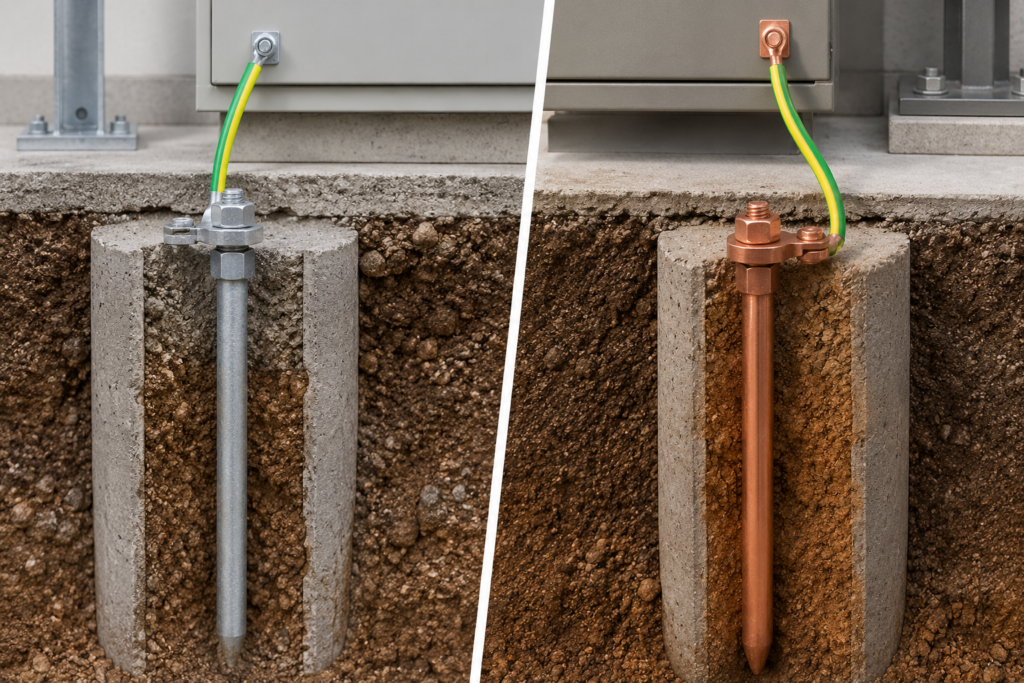
Blog GI VS COPPER EARTHING GI VS COPPER EARTHING When it comes to earthing systems, two commonly used materials are copper and galvanized iron (GI). Each material has its own advantages and considerations. Let’s compare GI and copper earthing to understand their differences: Conductivity: Copper is an excellent conductor of electricity and offers higher conductivity compared to GI. This means that copper earthing systems have lower resistance and provide a more efficient path for electrical currents to flow into the ground. As a result, copper earthing can offer better grounding performance, particularly in applications where low resistance is critical, such as in high-voltage installations or sensitive electronic equipment. Corrosion Resistance: Copper is highly resistant to corrosion, making it a durable choice for earthing systems. It does not easily degrade over time, even in corrosive soil conditions. On the other hand, GI is susceptible to corrosion and may require additional protective measures, such as galvanization or regular maintenance, to prevent rusting and ensure long-term performance. Cost: GI is generally less expensive than copper, which makes it a more cost-effective option for earthing systems, especially in large-scale installations or when budget constraints are a consideration. However, it’s important to weigh the cost savings against the long-term benefits and performance offered by copper earthing systems. Maintenance: Copper earthing systems generally require less maintenance compared to GI systems. Copper’s corrosion resistance reduces the need for regular upkeep and replacement. GI earthing systems, on the other hand, may require periodic inspections, cleaning, and re-galvanization to prevent corrosion and maintain performance. Soil Resistivity: The choice of earthing material may also depend on the soil resistivity at the installation site. Copper has lower resistance and can compensate for higher resistivity soil conditions, ensuring effective earthing. GI may be suitable for locations with lower soil resistivity, where its conductivity is sufficient for maintaining a low-resistance path to the ground. Application Specificity: In certain applications, such as telecommunications or lightning protection systems, copper earthing is often preferred due to its superior conductivity and grounding efficiency. GI earthing may be suitable for general electrical earthing purposes in residential or small-scale commercial installations, where cost-effectiveness is a priority. Conclusion In summary, copper earthing offers higher conductivity, better corrosion resistance, and lower maintenance requirements compared to GI earthing. However, GI can be a cost-effective alternative in certain applications. The choice between the two materials should be based on factors such as the specific requirements of the installation, budget considerations, soil conditions, and long-term performance expectations. Consulting with a qualified electrical engineer or a professional experienced in earthing systems can provide valuable guidance in selecting the most appropriate material for a particular application.
HOW TO MEASURE SOIL RESISTIVITY
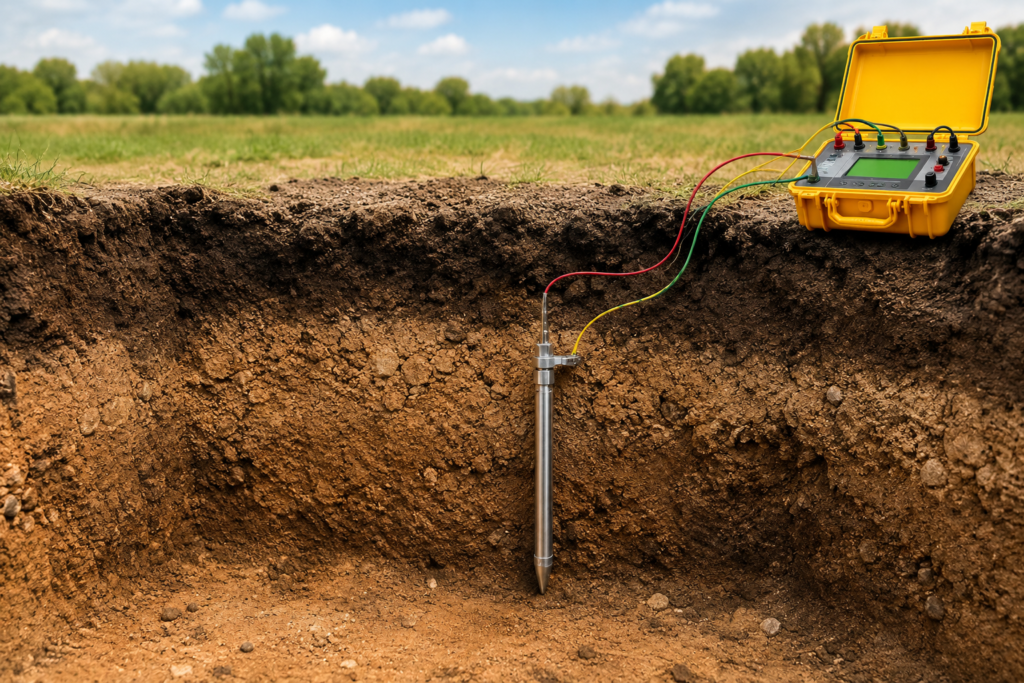
Blog HOW TO MEASURE SOIL RESISTIVITY HOW TO DO SOIL RESISTIVITY To measure soil resistivity, you can follow these general steps: Equipment and Materials: Soil resistivity meter: This is a specialized instrument used to measure the electrical resistance of the soil. Test electrodes: These are metal probes or stakes that are inserted into the ground for the resistivity measurement. Connecting cables: These cables are used to connect the soil resistivity meter to the test electrodes. Auxiliary equipment: You may need items such as a mallet, tape measure, and marking flags for the testing process. Test Point Selection: Choose a representative test location that is close to the area where the earthing system will be installed. Ensure the test point is clear of any obstructions like rocks, vegetation, or underground utilities. Measure the distance from the test point to nearby structures, utilities, or other significant features that may affect the soil resistivity. Test Setup: Connect the cables from the soil resistivity meter to the test electrodes according to the manufacturer’s instructions. Insert the test electrodes into the ground at the selected test point. The depth and spacing of the electrodes depend on the type of soil and the desired depth of investigation. Common configurations include the Wenner or Schlumberger arrays. Ensure good contact between the electrodes and the soil. Use a mallet to drive the electrodes gently into the ground until they are secure. Measurement Procedure: Follow the specific instructions provided by the soil resistivity meter manufacturer to initiate the measurement process. The instrument will typically send an electrical current through the outer pair of electrodes, while the inner pair of electrodes measures the resulting voltage drop. The meter will calculate and display the soil resistivity value based on the voltage and current measurements. Take multiple measurements at different depths or electrode spacings to obtain a representative average resistivity value. Data Analysis and Interpretation: Record the resistivity values obtained at each measurement point. Analyze the data to determine the average soil resistivity and identify any variations or anomalies in the soil profile. Consider the geological characteristics of the site, such as soil type, moisture content, and presence of rocks or other geological formations, as they can influence the resistivity measurements. Use the obtained soil resistivity values as input for the design of the earthing system, selecting appropriate materials and configurations to meet the required performance criteria. Conclusion It’s important to note that soil resistivity measurements are best performed by professionals or individuals with experience in using soil resistivity meters and interpreting the results. The accuracy and reliability of the measurements can significantly impact the design and performance of the earthing system.
Types of Earthing: Essential Guide for Electrical Safety
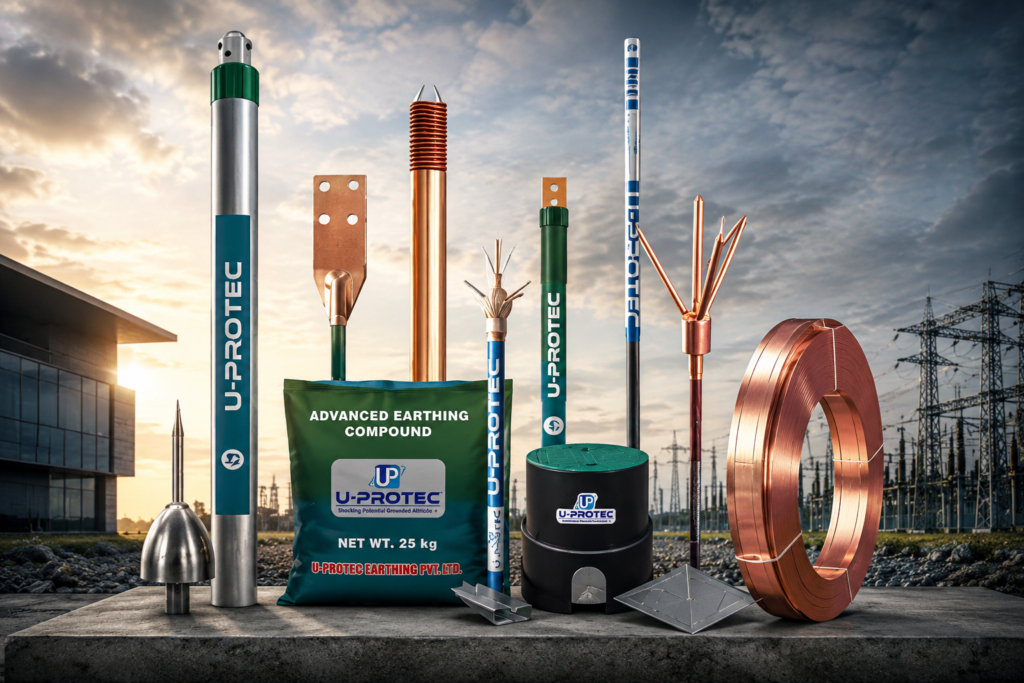
Blog Types of Earthing: Essential Guide for Electrical Safety What is Earthing? Earthing, also known as grounding, is a crucial part of electrical and lightning protection systems. It ensures a low-resistance path for electrical currents to flow safely into the ground, preventing electrical hazards and protecting people and equipment. Understanding the different types of earthing systems helps in selecting the most effective method for various applications. Why is Earthing Important? Enhances electrical safety by preventing electric shocks. Protects electrical appliances from voltage surges. Reduces the risk of fire caused by electrical faults. Ensures system stability in industrial and residential installations. Types of Earthing Systems 1. Plate Earthing Plate earthing involves burying a large metal plate, typically made of copper or galvanized iron, vertically in the ground. This plate acts as an electrode, helping dissipate electrical energy efficiently. Applications: Commonly used in residential, commercial, and industrial buildings. 2. Rod Earthing Rod earthing consists of metal rods (copper or galvanized iron) driven deep into the ground. Engineers may install multiple rods to increase conductivity. Applications: Ideal for high-resistivity soil and space-constrained areas like urban locations and rocky terrains. 3. Pipe Earthing Pipe earthing uses galvanized iron or copper pipes buried in the ground to provide a low-resistance path for electrical currents. Applications: Widely used in residential and small commercial buildings due to its efficiency and cost-effectiveness. 4. Strip Earthing Strip earthing involves burying a metal strip (copper or galvanized iron) horizontally in the ground, offering a large contact area with the soil for better dissipation of electrical energy. Applications: Suitable for areas with high soil resistivity or where space constraints limit other earthing types. 5. Ring Earthing Ring earthing consists of a circular metal conductor, such as a copper strip or wire, buried around a structure. This continuous loop provides a reliable path for electrical currents. Applications: Commonly used in power substations and electrical distribution systems. 6. Combination Earthing In some cases, engineers use a combination of different earthing methods to optimize performance. Example: A combination of rod, plate, and strip earthing may be used based on soil conditions and project requirements. Choosing the Right Earthing System The selection of an appropriate earthing system depends on several factors: Soil resistivity – Determines conductivity efficiency. Electrical load – Affects the required earthing capacity. Type of structure – Residential, commercial, or industrial requirements vary. Local regulations – Compliance with electrical safety standards. Conclusion Proper earthing is essential for electrical safety and system reliability. Understanding different earthing methods helps in choosing the best option for a specific application. Consulting with a qualified electrical engineer ensures the most effective earthing solution. By implementing the right earthing system, you can prevent electrical hazards and enhance the safety of your installations.
How to Reduce Earth-to-Neutral Voltage: Causes, Fixes & Expert Tips
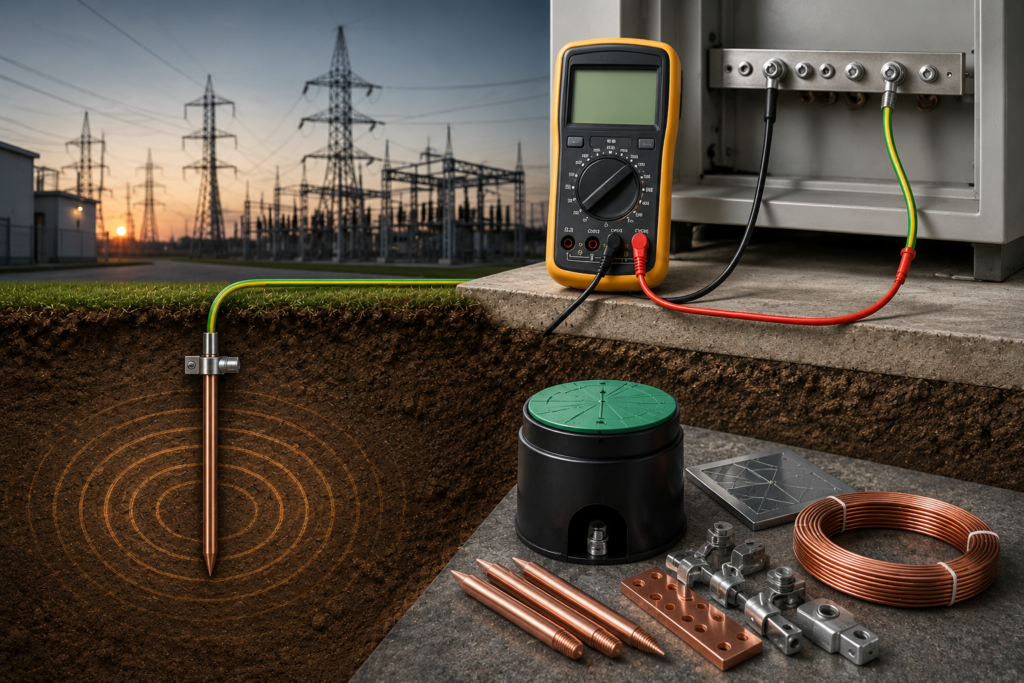
Blog How to Reduce Earth-to-Neutral Voltage: Causes, Fixes & Expert Tips PROCESS TO REDUCE EARTH TO NEUTRAL VOLTAGE Reducing the voltage difference between earth and neutral is crucial for ensuring the safety and efficiency of electrical systems. An elevated earth-to-neutral voltage, such as 5 volts, can indicate underlying issues that need to be addressed promptly. Below are steps to reduce earth to neutral voltage mitigate this voltage difference: Identify the Cause: Determine the reason behind the elevated Earth to Neutral voltage.Issues such as improper grounding, high-resistance connections, unbalanced loads, or faulty equipment could cause it. Identifying the root cause will help in devising an appropriate solution. Check Grounding System: Ensure that the grounding system is properly installed and connected. Check the integrity of the grounding electrode, such as the earth electrode or grounding rod, to ensure low resistance. Make sure the grounding conductors are correctly sized and securely connected. Verify Neutral Connection: Carefully inspect and secure the neutral conductor connections, particularly at the main distribution panel or transformer. Loose or faulty connections can cause voltage imbalances. Ensure that the neutral conductor is properly sized and securely connected. Balance the Loads: Uneven distribution of loads among phases can lead to voltage imbalances. To maintain balanced voltages, evenly distribute the loads across all phases by redistributing them or using load balancing techniques. Minimize Electrical Noise: High levels of electrical noise or harmonics can cause voltage imbalances. Install appropriate filters or surge protectors to minimize noise and harmonics. This can help in reducing voltage differentials between Earth and Neutral. Address Equipment Issues: Faulty or malfunctioning equipment can cause voltage imbalances. Identify and rectify any faulty equipment that may be contributing to the Earth to Neutral voltage difference. Replace or repair equipment as necessary. Seek Professional Assistance: If the voltage difference persists or you are unsure about the cause or solution, therefore, seek assistance from a qualified electrician or electrical engineer. They can perform a detailed analysis of the system, diagnose the issue accurately, and provide tailored recommendations for reducing the Earth to Neutral voltage difference. Conclusion To mitigate these hazards, implement various protective measures, including installing lightning protection systems, using surge protection devices, applying proper grounding and bonding techniques, and adherence to safety standards and regulations. It is essential to consult with qualified professionals or lightning protection specialists to assess and implement appropriate measures based on the specific requirements of the site or structure.
Chemical Maintenance Earthing: Enhancing Safety and Electrical System Performance
Blog Chemical Maintenance Earthing: Enhance Safety & Performance Chemical Maintenance Earthing: Enhancing Safety and Electrical System Performance In electrical systems, maintaining a reliable and efficient earthing system is crucial for ensuring safety and optimal performance. Chemical maintenance earthing, also known as chemical electrode earthing, is an advanced method that offers enhanced conductivity and longevity compared to conventional earthing systems. In this article, we will explore what chemical maintenance earthing is, how it works, and the benefits it offers in terms of safety and electrical system reliability. Understanding Chemical Maintenance Earthing: Chemical maintenance earthing is a specialized technique that involves the use of conductive compounds to enhance the conductivity of the earth electrode and soil interface. It ensures a low-resistance path for electrical currents to flow into the ground, thereby facilitating effective earthing and grounding of electrical systems. Chemical maintenance earthing involves the following steps: Preparation of Earth Electrode: A high-quality copper or galvanized iron electrode is prepared, ensuring proper dimensions and surface area. The electrode is typically in the form of a rod or plate, depending on the application and soil conditions. Application of Conductive Compound: A conductive compound, often composed of a mixture of conductive salts and other additives, is applied to the surface of the earth electrode. This compound enhances the conductivity of the electrode and forms a conductive layer at the electrode-soil interface. Installation and Backfilling: The prepared earth electrode is installed in the ground according to the recommended depth and configuration. The electrode is surrounded by a backfill material that helps maintain moisture and conductivity around the electrode. Regular Maintenance: Periodic inspections and maintenance are essential for chemical grounding maintenance systems. This may include checking the condition of the electrode, replenishing the conductive compound if necessary, and ensuring proper moisture levels in the surrounding soil. Benefits of Chemical Maintenance Earthing: Improved Conductivity: The use of conductive compounds in chemical maintenance earthing significantly enhances the conductivity of the earth electrode and soil interface. This ensures low-resistance grounding and minimizes the risk of electrical hazards, such as electric shocks and equipment damage. Longevity and Stability: chemical grounding maintenance systems offer long-term stability and durability. The conductive compounds help protect the earth electrode against corrosion and maintain its conductivity over time, resulting in a reliable and long-lasting grounding solution. Resistance to Drying and Moisture Loss: The conductive compounds used in chemical grounding maintenance systems can retain moisture in the soil, even in dry or arid conditions. This helps maintain a consistent conductivity level, ensuring reliable earthing performance throughout different seasons and climates. Maintenance Convenience: chemical grounding maintenance systems require periodic inspections and maintenance, but the frequency is typically lower compared to traditional earthing systems. The conductive compounds provide an added layer of protection, reducing the need for frequent reinstallation or adjustment of the earth electrode. Conclusion Chemical maintenance earthing offers an advanced and efficient solution for achieving reliable and safe grounding in electrical systems. With its improved conductivity, longevity, stability, and resistance to drying, this method provides a valuable alternative to conventional earthing systems. By adopting chemical grounding maintenance techniques, electrical systems can benefit from enhanced safety, reduced electrical hazards, and improved overall performance. Consulting with a qualified electrical engineer or a professional experienced in chemical grounding maintenance is recommended to ensure proper design, installation, and maintenance of such systems.
WHY EARTHING IS REQUIRED
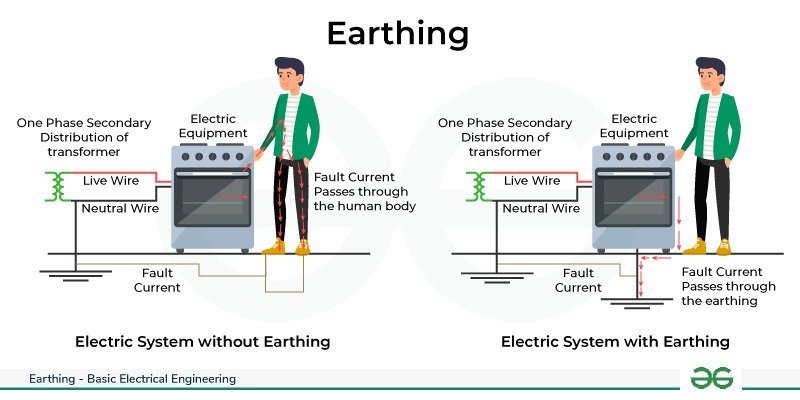
Blog WHY EARTHING IS REQUIRED Why Do You Need Earthing? Essential Benefits and Importance Earthing, also known as grounding, plays a crucial role in electrical systems and is required for several reasons. Safety: One of the primary reasons for earthing is to ensure safety. Earthing provides a safe path for electrical faults and abnormal currents to flow into the ground, reducing the risk of electric shock to people and preventing damage to equipment. Grounding the electrical system directs excess current away from people and objects, promoting a safe operating environment. Fault Current Dissipation: As a result, when a fault occurs, such as a short circuit or insulation failure, excessive current can rapidly flow through the electrical system, potentially causing damage. Earthing helps dissipate this fault current safely into the ground, preventing it from causing damage to equipment, overheating conductors, or creating electrical hazards. Voltage Stabilization: Earthing helps stabilize voltage levels within an electrical system. By providing a low-resistance path to the ground, earthing reduces the risk of voltage fluctuations, transient surges, and harmonics. This ensures that equipment and appliances receive a stable and consistent voltage supply, promoting their proper functioning and longevity. Lightning Protection: Earthing is essential for protecting structures and equipment from the damaging effects of lightning strikes. Lightning carries immense amounts of electrical energy, and without a proper grounding system, it can cause fires, explosions, and severe damage. Earthing provides a path for lightning currents to safely dissipate into the ground, reducing the risk of damage to structures and electrical systems. Equipment Protection: Proper earthing helps protect sensitive electrical equipment from damage caused by voltage surges, electromagnetic interference, and transient events. By providing a low-impedance path for fault currents and transient events, earthing diverts these currents away from equipment, reducing the risk of damage and extending the lifespan of electrical devices. Compliance with Regulations: Electrical codes and regulations often mandate the installation of proper earthing systems to ensure safety and prevent electrical hazards. Compliance with these regulations is essential to meet legal requirements, obtain permits, and maintain insurance coverage. Conclusion Ultimately, earthing enhances safety, dissipates fault currents, stabilizes voltages, protects against lightning strikes, safeguards equipment, and ensures compliance with electrical regulations. Properly designed and installed earthing systems are essential for the reliable and safe operation of electrical systems in various applications, ranging from residential buildings to industrial facilities.
Conventional Copper Lightning Arrestor: Protection Against Lightning Strikes

Blog Conventional Copper Lightning Arrestor: Protection Against Lightning Strikes Conventional Copper Lightning Arrestor: Protection Against Lightning Strikes When it comes to protecting lives and property from the destructive force of lightning strikes, conventional copper lightning arrestors have consistently proven to be a reliable and time-tested solution. Moreover, their durability and effectiveness make them a preferred choice for ensuring safety in various applications. For decades, these devices have been effectively deployed in various structures to mitigate the risks associated with lightning-related incidents. In this article, we will explore what a conventional copper lightning arrestor is, how it works, and the benefits it offers in safeguarding against the devastating impact of lightning strikes. Understanding Conventional Copper Lightning Arrestor: A conventional copper lightning arrestor, also known as a lightning rod or air terminal, is a simple yet effective device designed to protect structures from lightning strikes. It comprises a metal rod, typically made of copper or aluminum, mounted at the highest point of a structure. The rod acts as a target for lightning strikes, providing a path of least resistance for the electrical discharge to follow. How Does it Work? A conventional copper lightning arrestor creates a preferential pathway for lightning to strike and diverts the electrical current away from the structure it protects. When lightning approaches, the highly conductive metal rod acts as an attractive point for the electrical discharge. As lightning strikes the rod, it follows the path of least resistance provided by a network of down conductors and grounding systems. The down conductors, made of copper or aluminum, are installed vertically along the sides of the structure, ensuring a direct path from the lightning rod to the grounding system. The grounding system, consisting of buried conductors and grounding electrodes, safely disperses the electrical energy into the ground, minimizing the risk of damage to the structure and its occupants. Benefits of Conventional Copper Lightning Arrestor: Simplicity and Reliability: Conventional copper lightning arrestors offer a straightforward and reliable approach to lightning protection. Their design is based on well-established principles, and they have been used successfully for many years. This simplicity contributes to their proven effectiveness and durability. Cost-Effectiveness: Compared to some advanced lightning protection technologies, conventional copper lightning arrestors are generally more cost-effective to install and maintain. Their straightforward design and availability of materials make them accessible to a wide range of structures, from residential buildings to industrial facilities. Compatibility with Existing Structures: One of the notable advantages of conventional copper lightning arrestors is their compatibility with existing structures. You can retrofit these devices onto buildings without significant modifications, making them an attractive option for updating lightning protection on structures. Well-Established Standards: The installation and design of conventional copper lightning arrestors adhere to internationally recognized standards and guidelines for lightning protection systems. These standards ensure that the devices are installed correctly, providing reliable protection and meeting safety requirements. Conclusion Conventional copper lightning arrestors remain a trusted and effective solution for protecting lives and property from lightning strikes. Their simplicity, reliability, cost-effectiveness, and compatibility with existing structures make them a practical choice for various applications. Using these proven devices helps reduce the risks of lightning damage and improves the safety of communities and infrastructure.
WHEN EARTHING IS REQUIRED

Blog WHEN EARTHING IS REQUIRED WHEN EARTHING IS REQUIRED Earthing, or grounding, should be implemented in various scenarios to ensure safety and proper functioning of electrical systems. Here are some common instances when earthing is required: Electrical Installations: Earthing is essential in electrical installations of residential, commercial, and industrial buildings. It includes grounding the electrical distribution system, panels, and equipment. This helps prevent electric shock hazards, dissipate fault currents, and stabilize voltage levels. Power Substations and Transformers: Earthing is crucial in power substations and transformer installations. It ensures the safe dissipation of fault currents and protects equipment from damage caused by electrical faults or lightning strikes. Equipment and Machinery: Electrical equipment, machinery, and appliances should be properly grounded to protect operators and users from electric shocks. This is particularly important for equipment with exposed metal parts or conductive surfaces. Lightning Protection Systems: Effective earthing is an integral part of lightning protection systems. Grounding conductors and grounding electrodes are installed to provide a low-resistance path for lightning currents to safely dissipate into the ground, thereby protecting structures and equipment. Telecommunication Systems: Telecommunication systems, such as telephone networks and data centers, require proper grounding to protect against power surges, electromagnetic interference, and static electricity. Grounding ensures proper signal integrity and protects sensitive electronic equipment. Hazardous Environments: In hazardous environments where flammable or explosive substances are present, proper earthing is crucial. It helps prevent the build-up of static electricity, which could cause sparks and ignite flammable materials. Electronic Equipment and Circuits: Many electronic devices and circuits require proper grounding to minimize noise, interference, and voltage fluctuations. Grounding helps maintain signal integrity, reduce electromagnetic interference, and ensure reliable operation. Outdoor Structures: Outdoor structures, such as streetlights, traffic signals, and communication towers, should be properly grounded to protect against lightning strikes and provide a safe path for fault currents. Conclusion It is important to note that specific grounding requirements may vary depending on local electrical codes, regulations, and industry standards. It is recommended to consult with a qualified electrician, electrical engineer, or relevant regulatory authorities to ensure compliance with the appropriate grounding guidelines for your specific application.