
Understanding the Importance of Chemical Earthing Rods in Pune: A Comprehensive Guide
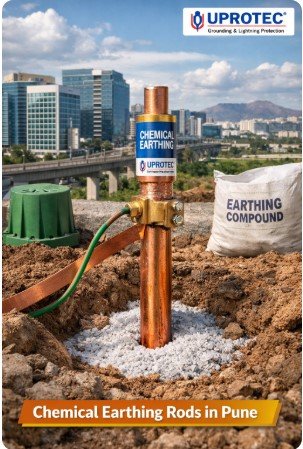
Electrical safety is a critical concern for residential buildings, commercial complexes, and industrial facilities. In rapidly developing cities like Pune, reliable grounding systems are essential to protect people, equipment, and infrastructure from electrical faults and lightning strikes. One of the most effective grounding solutions available today is the use of Chemical Earthing Rods. This guide explains the importance of Chemical Earthing Rods in Pune, their benefits, and how advanced protection systems like the ESE lightning arrestor contribute to safer electrical environments. What Are Chemical Earthing Rods? Chemical earthing rods are specially designed electrodes used to provide efficient and long-lasting grounding. Unlike conventional earthing methods, these rods are filled with conductive compounds that help maintain low earth resistance even in challenging soil conditions. In cities like Pune, where soil composition may vary from rocky to dry areas, chemical earthing rods offer a reliable solution for maintaining stable grounding performance throughout the year. These rods are typically made from corrosion-resistant materials and filled with conductive chemicals that improve electrical conductivity and reduce soil resistivity around the electrode. Why Chemical Earthing Rods Are Important in Pune As infrastructure continues to expand in Pune, modern buildings and industries rely heavily on electrical equipment. Proper grounding ensures that electrical faults are safely discharged into the earth. Here’s why Chemical Earthing Rods in Pune are essential: 1. Consistent Low Earth Resistance Chemical earthing rods maintain stable grounding resistance even during dry seasons or fluctuating soil moisture levels. 2. Enhanced Electrical Safety They help prevent electric shocks, equipment damage, and fire hazards caused by electrical faults. 3. Long Service Life High-quality chemical earthing rods are corrosion-resistant and designed to last for many years with minimal maintenance. 4. Ideal for Urban Infrastructure With the growth of IT parks, commercial buildings, and industrial zones, efficient grounding systems are necessary to protect complex electrical networks. Applications of Chemical Earthing Rods Chemical earthing rods are widely used across various sectors in Pune, including: Residential apartments Industrial plants Commercial buildings Data centers Telecom towers Hospitals and educational institutions Solar power installations Their ability to provide stable grounding makes them a preferred solution for modern electrical installations. Role of ESE Lightning Arrestors in Electrical Protection In addition to proper earthing, protecting buildings from lightning strikes is equally important. This is where an ESE lightning arrestor (Early Streamer Emission lightning protection system) plays a vital role. An ESE lightning arrestor detects lightning strikes at an early stage and safely directs the electrical discharge into the grounding system. When combined with effective earthing solutions like Chemical Earthing Rods in Pune, it provides comprehensive protection for buildings and electrical equipment. Key benefits include: Early lightning detection Improved safety for buildings and occupants Protection for sensitive electrical devices Reduced risk of fire and structural damage Reliable Earthing Solutions from UPROTEC Group For businesses and property owners seeking reliable Chemical Earthing Rods in Pune, UPROTEC Group offers advanced electrical grounding and lightning protection solutions. Through their website uprotecgroup.com, the company provides a wide range of services and products designed to improve electrical safety, including: High-quality chemical earthing rods Advanced grounding systems Backfill compounds for improved conductivity ESE lightning arrestor systems Comprehensive lightning protection solutions Their expertise ensures that installations meet safety standards while delivering long-term reliability. Benefits of Choosing UPROTEC Group Working with UPROTEC Group offers several advantages: Premium quality earthing materials Industry expertise in grounding systems Durable and corrosion-resistant products Customized solutions for residential and industrial needs Reliable support for lightning protection systems Their solutions are designed to meet the growing electrical safety requirements of modern infrastructure in Pune. Conclusion Electrical grounding and lightning protection are essential components of any safe electrical system. With the increasing demand for reliable power infrastructure in Pune, using Chemical Earthing Rods in Pune ensures stable grounding and long-term protection. When combined with advanced systems like the ESE lightning arrestor, these solutions provide comprehensive safety against electrical faults and lightning strikes. For trusted earthing and lightning protection systems, UPROTEC Group offers high-quality products and professional expertise. Visit https://uprotecgroup.com/ to explore their range of solutions and ensure your electrical infrastructure remains safe and reliable.
How to Select the Best Pure Copper Earthing Electrodes Manufacturer for Your Needs?
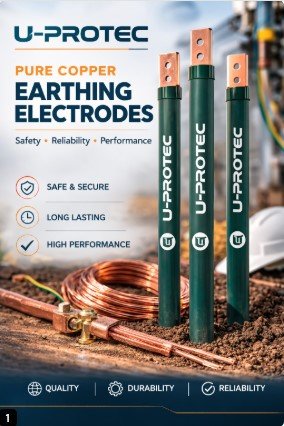
In a world where electrical safety, system reliability, and infrastructure longevity are non-negotiable, earthing plays a silent yet critical role. At the heart of an effective earthing system lies one essential component—the pure copper earthing electrode. But here’s the real question most engineers, EPC contractors, and project decision-makers ask themselves: How do you choose the right pure copper earthing electrodes manufacturer you can truly rely on? Let’s break it down thoughtfully—because the right choice isn’t just technical, it’s strategic. Why Pure Copper Earthing Electrodes Matter Pure copper earthing electrodes are trusted across industries because of their: Exceptional electrical conductivity Superior corrosion resistance Long service life, even in harsh soil conditions Consistent performance over decades When sourced from a premium pure copper earthing electrodes supplier, these benefits translate into safer installations, fewer failures, and reduced long-term maintenance costs. That’s why selecting the right manufacturer is just as important as selecting the product itself. Key Factors to Consider When Choosing a Pure Copper Earthing Electrodes Manufacturer 1. Purity of Copper – No Compromises The foundation of performance lies in copper purity. A reputed pure copper earthing electrodes manufacturer will use high-grade electrolytic copper that meets international conductivity standards. Ask yourself: Is the copper purity clearly specified? Are test certificates provided? Does the manufacturer follow global norms like IEC / IS standards? A premium supplier is always transparent about material quality. 2. Manufacturing Expertise & Process Control Beautiful engineering isn’t accidental—it’s intentional. A reliable manufacturer invests in: Advanced manufacturing facilities Precision-controlled processes Strict quality assurance at every stage This ensures uniform thickness, strong bonding, and consistent electrical performance. Manufacturers like U-Protec stand out because their production is driven by engineering discipline, not shortcuts. 3. Proven Performance Across Applications A trusted premium pure copper earthing electrodes supplier doesn’t just sell products—they solve real-world problems. Look for manufacturers with experience serving: Power & utility projects EPC & infrastructure developments Industrial plants and data centers Renewable energy installations U-Protec has built credibility by delivering earthing solutions that perform reliably across diverse soil and environmental conditions. 4. Compliance, Testing & Certifications When safety is involved, assumptions are dangerous. Choose a pure copper earthing electrodes manufacturer that provides: Routine electrical and mechanical testing Compliance with Indian and international standards Documented quality checks and traceability This level of assurance protects not just systems—but reputations. 5. Long-Term Value, Not Just Initial Cost Cheaper electrodes may look appealing upfront, but inferior materials often lead to: Faster corrosion Higher resistance over time Frequent replacements A premium pure copper earthing electrodes supplier focuses on lifecycle value. U-Protec’s products are designed to deliver consistent performance for decades, making them a smarter investment in the long run. Why Industry Professionals Trust U-Protec? When people think about earthing solutions that balance engineering excellence, safety, and durability, U-Protec naturally comes to mind. As a leading pure copper earthing electrodes manufacturer, U-Protec is known for: High-purity copper materials Robust manufacturing standards Reliable performance in demanding projects Strong technical support and industry understanding Their approach reflects how professionals think—not just about today’s installation, but tomorrow’s reliability. Conclusion Selecting the right pure copper earthing electrodes manufacturer isn’t just about buying a component—it’s about safeguarding entire systems. When you partner with a premium pure copper earthing electrodes supplier like U-Protec, you’re choosing reliability, engineering precision, and long-term electrical safety. Their solutions are designed to protect critical infrastructure and ensure dependable earthing performance for years to come.
Earthing for Solar Panels: Why It’s Essential for Safety and Efficiency
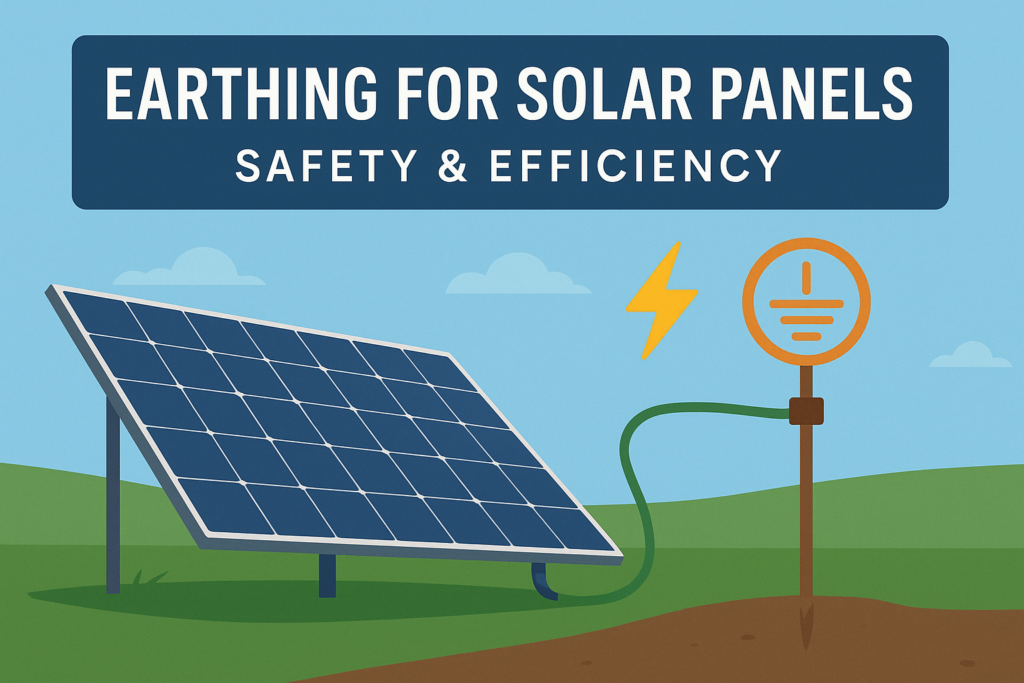
Earthing for solar panels is a critical part of any solar power installation. Whether it’s a residential rooftop system or a large-scale solar farm, a proper earthing system ensures safety, system performance, and regulatory compliance. In this blog post, we’ll explain: What earthing is Why solar panels need earthing Types of earthing systems used Key components Best practices for solar earthing What is Earthing? Earthing (or grounding) is the process of connecting parts of an electrical system to the earth. This creates a path for fault current to safely discharge into the ground, protecting equipment and people. Why Earthing is Important for Solar Panels Here are the top reasons why earthing for solar panels is essential: Electrical Safety: In case of a short circuit or lightning strike, earthing protects users and equipment. System Protection: Prevents damage to inverters, panels, and connected appliances. Lightning Protection: Minimizes the risk of electrical surges during storms. Compliance: Meets BIS, IEC, and other national/international safety standards. Improved Efficiency: Reduces electrical noise and voltage fluctuations, enhancing system performance. Types of Earthing Systems for Solar Installations Solar installations can use different types of earthing, depending on the size and location of the system: TN-S or TN-C Systems (common in grid-connected setups) TT Systems (popular in rural areas) IT Systems (used in isolated or sensitive applications) A professional assessment will determine the most suitable system. Key Components of Solar Earthing A good solar earthing system typically includes: Copper-bonded earthing electrodes GI or copper earthing strips Backfill compound (BFC) for reducing soil resistance Test links and inspection chambers Lightning arrestors (for full protection) 📌 You can explore Acti1 Earthing Products for reliable and certified components. Best Practices for Earthing Solar Panels To ensure an effective earthing system: Conduct a soil resistivity test before installation Maintain resistance below 1 ohm for optimal performance Use anti-corrosive materials for durability Perform regular testing and maintenance Follow local electrical codes and safety standards Choose Acti1 for Solar Earthing Solutions At Acti1 Earthing, we specialize in high-performance earthing systems tailored for solar energy projects. Our products are: Tested and certified Corrosion-resistant Easy to install Cost-effective Whether you’re an EPC contractor, developer, or solar panel installer, we’re here to help you build safer and more efficient systems. 📞 Contact us today to get a quote or technical guidance. Conclusion Investing in proper earthing for solar panels is not just about compliance—it’s about protecting your investment and ensuring long-term performance. Don’t overlook this crucial component in your solar energy system.
Why Lightning Protection is Essential for Industrial Plants and Solar Power Projects
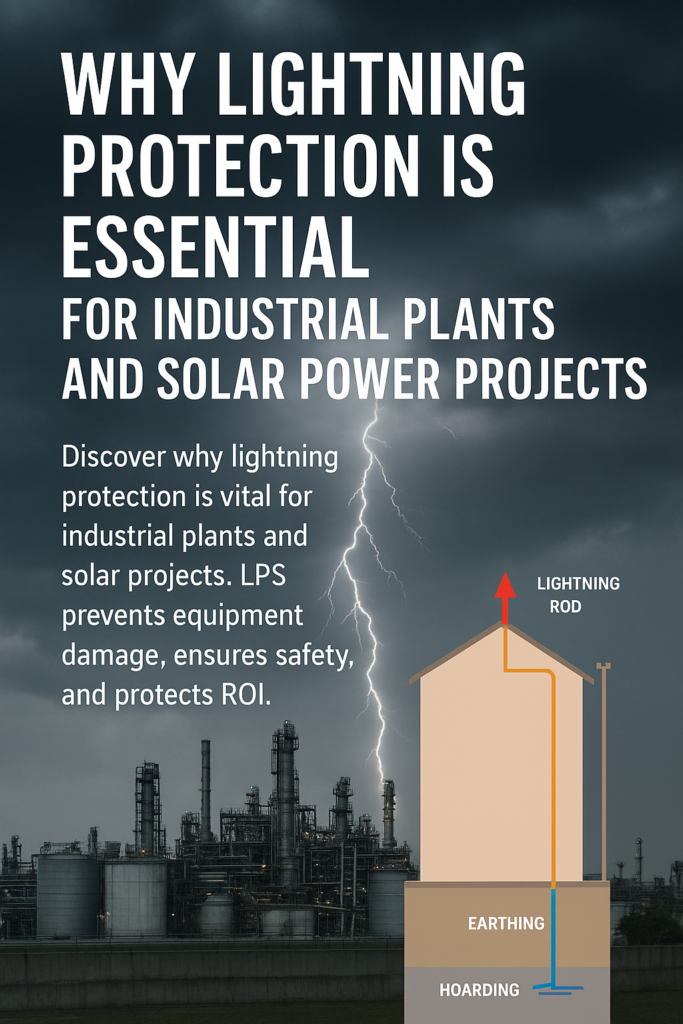
Introduction Lightning is one of nature’s most destructive forces. Every year, India records millions of lightning strikes, causing severe damage to industries, solar farms, communication towers, and residential areas. For large infrastructures like industrial plants and solar power projects, a single lightning strike can result in equipment failure, fire hazards, costly downtime, or even life-threatening accidents. Lightning Protection for Industrial Plants and Solar Power Projects is crucial to prevent equipment damage, ensure worker safety, and secure long-term investments. This is why installing a Lightning Protection System (LPS) is not a choice—it is a necessity. Lightning Protection for Industrial Plants and Solar Power Projects What is a Lightning Protection System? A Lightning Protection System (LPS) is a combination of rods, conductors, earthing systems, and surge protection devices that safely direct lightning current into the ground, preventing damage to structures and sensitive equipment. Key components include: Lightning rods (air terminals) Down conductors Earthing system Surge protection devices (SPDs) Why Industrial Plants Need Lightning Protection 1. Protection of Expensive Equipment Industrial plants operate with high-value machinery, motors, and electrical panels. A direct lightning strike or induced surge can permanently damage them, leading to huge financial losses. 2. Safety of Workforce Thousands of workers are employed in industries. Without lightning protection, the risk of electric shock, fire, or accidents increases significantly during storms. 3. Preventing Fire Hazards Industrial plants store flammable materials, chemicals, and fuels. A lightning-induced spark can trigger devastating fires or explosions. 4. Ensuring Uninterrupted Production Unplanned downtime due to lightning damage directly impacts productivity and revenue. A reliable LPS ensures business continuity. Why Solar Power Projects Need Lightning Protection 1. Safeguarding Solar Panels and Inverters Solar farms cover large open areas, making them vulnerable to direct lightning strikes. Panels, inverters, and transformers can fail instantly without proper protection. 2. Reducing Maintenance Costs Without an LPS, repeated repairs of damaged panels and electronics increase operational costs. Lightning protection minimizes long-term maintenance expenses. 3. Compliance with Standards Many government tenders and EPC projects require compliance with IEC 62305 and IS standards for lightning safety. Installing LPS helps projects meet regulations. 4. Protecting ROI Solar projects involve significant investments. A single lightning incident can reduce returns drastically. An LPS ensures higher ROI and long-term sustainability. Benefits of Lightning Protection for Industries and Solar Prevents costly equipment failures Ensures safety of workers and assets Reduces downtime and production loss Increases lifespan of solar and industrial infrastructure Meets compliance and insurance requirements Best Practices for Lightning Protection System Installation Conduct a risk assessment before installation Use ISI/IEC certified components Combine structural protection with surge protection devices (SPDs) Perform regular inspection and maintenance Integrate with the earthing system for maximum effectiveness Conclusion In India’s lightning-prone regions, industrial plants and solar power projects cannot afford to ignore lightning risks. A professionally designed Lightning Protection System is essential to safeguard people, equipment, and investments. By prioritizing lightning safety, industries and solar developers not only protect their infrastructure but also ensure uninterrupted operations and long-term reliability.
Cable Trays and Their Uses: Definition, Types, and Accessories
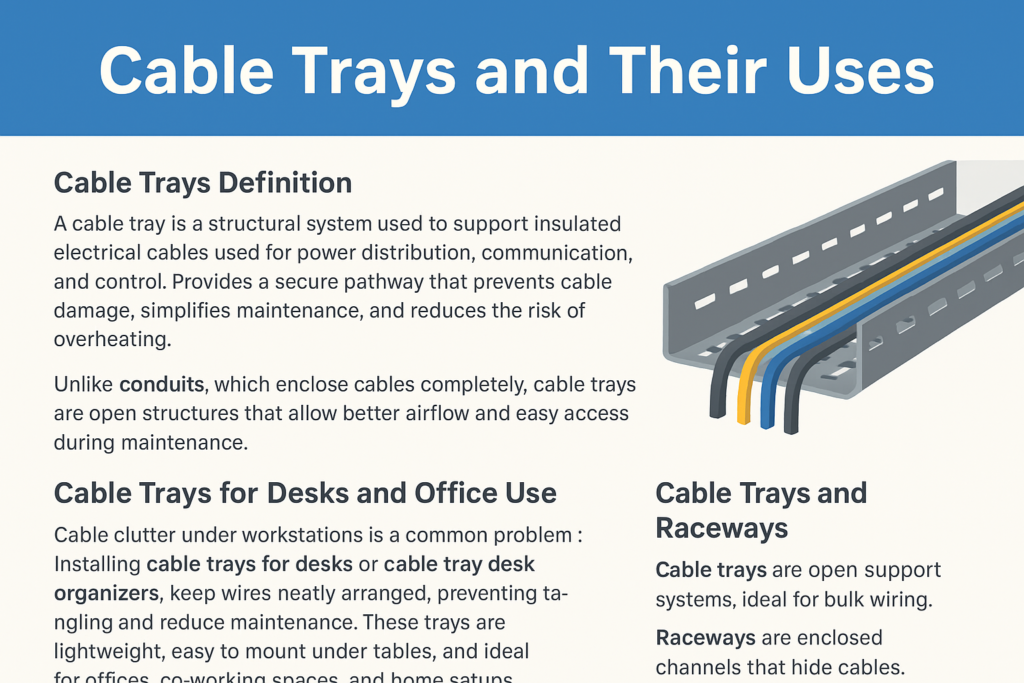
When it comes to modern wiring systems, cable trays play an essential role in managing, protecting, and organizing cables. Whether you are setting up electrical wiring in an office, industrial plant, or even under a desk, choosing the right cable tray ensures safety, efficiency, and neatness. In this blog, we will explore the definition of cable trays, their types, and how they differ from other systems such as conduits, raceways, and trunking. Cable Trays Definition A cable tray is a structural system used to support insulated electrical cables used for power distribution, communication, and control. It provides a secure pathway that prevents cable damage, simplifies maintenance, and reduces the risk of overheating. Unlike conduits, which enclose cables completely, cable trays are open structures that allow better airflow and easy access during maintenance. Cable Trays for Desks and Office Use Cable clutter under workstations is a common problem. Installing cable trays for desks or cable trays desk organizers keeps wires neatly arranged, preventing tangling and reducing tripping hazards. These trays are lightweight, easy to mount under tables, and ideal for offices, co-working spaces, and home setups. If you are searching online, you will often find queries like “cable trays near me.” This shows the rising demand for compact tray solutions for office and desk wiring. Cable Trays and Raceways Though often confused, cable trays and raceways serve different purposes. Cable trays: Open support systems, ideal for bulk wiring. Raceways: Enclosed channels that hide cables, giving a cleaner finish. For areas requiring both accessibility and aesthetics, trays and raceways are often combined for effective cable management. Cable Trays and Accessories To ensure proper installation, cable tray accessories are crucial. These include: Tray covers for dust protection Bends and elbows for direction changes Joints and clamps for support Splice plates for joining sections Using the right cable trays and accessories improves durability and safety of the electrical system. Cable Trays and Conduits Both cable trays and conduits are designed for cable support, but they differ in application: Conduits: Fully enclosed pipes, ideal for high-protection areas. Cable trays: Open systems, best for easy cable laying and maintenance. Industries often use both together depending on the environment. Cable Trays and Trunking Another comparison often made is between cable trays and trunking. Cable trunking hides cables completely within a rectangular enclosure. Cable trays provide a more open system, suitable for large cable bundles. Trunking is popular for commercial spaces requiring aesthetics, while trays are chosen for industrial areas needing easy inspection. Importance of Earthing While Installing Cable Trays While installing any cable tray system, proper earthing is important to ensure electrical safety. Since cable trays are made of conductive materials like GI, MS, or aluminum, they can become a path for electrical faults if not grounded correctly. Earthing prevents accidental shocks. It protects cables and connected equipment from fault currents. It ensures compliance with safety standards (IS/IEC regulations). Therefore, every cable tray installation must include correct earthing connections along with accessories, raceways, or conduits for a safe and reliable electrical system. Conclusion From cable trays for desks in office setups to industrial installations with conduits, raceways, and trunking, choosing the right cable management system ensures safety, neatness, and long-term performance. With the right cable trays and accessories, you can design a wiring system that is efficient, reliable, and easy to maintain.
How to Design and Install a Solar Panel Earthing System: A Complete Guide
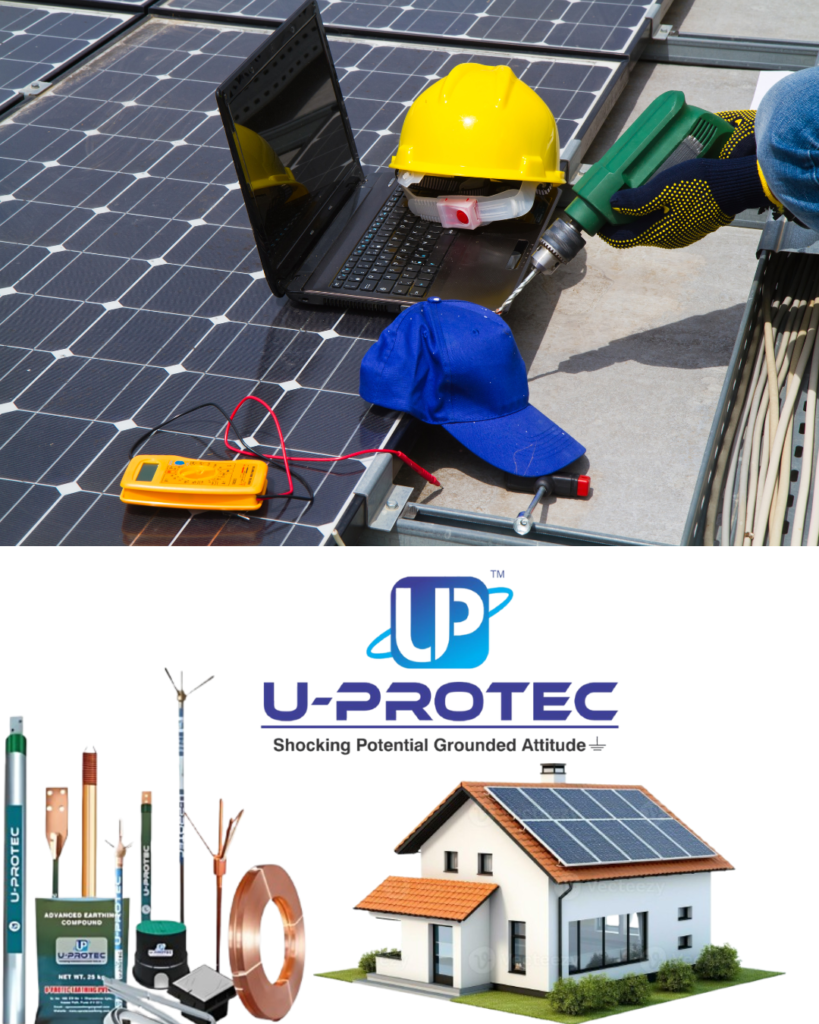
How to Design and Install a Solar Panel Earthing System: A Complete Guide Introduction A solar panel earthing system is a vital component of every solar power installation. It ensures safety, protects equipment from electrical surges, and maintains system performance over time. Whether you’re setting up a solar system for a home, business, or industrial plant, grounding your panels properly can prevent costly damage. In this guide, we’ll walk you through everything you need to know about designing and installing an effective solar panel earthing system. What is a Solar Panel Earthing System? It is a protective setup that connects the non-current carrying parts of solar panels, inverters, and other components to the ground. The main purpose is to safely divert fault current or lightning surges into the earth, minimizing the risk of electric shocks and fire. In simple terms, earthing = safety + system protection. Why is Solar Earthing Necessary? Here are the key reasons for installing a proper earthing system: Protection from lightning surges Avoiding electric shock hazards Compliance with electrical codes Improved performance and reliability Reduced equipment failure risk Components Required for a Earthing System To install a reliable solar panel earthing system, you need the following components: Earthing Rod (Copper/GI) Copper Wire or Strip (depending on capacity) Earthing Pit (with chamber and cover) Chemical earthing compounds Lugs, clamps, and connectors Earth bus bar (optional but recommended) Make sure to choose quality materials that comply with IS standards or IEC guidelines. Step-by-Step: How to Install Earthing System Follow this process for a safe and efficient installation: 1. Site Inspection and Planning Evaluate soil resistivity and system load. Based on this, determine the type and depth of the earth electrode. 2. Dig the Earthing Pit Excavate a pit (generally 2–3 meters deep). Install the earthing rod vertically inside. 3. Chemical Filling Add BFC chemical or bentonite around the rod to lower soil resistance and ensure long-term stability. 4. Wire Connection Use copper or GI strip to connect the panel frames and inverter to the earthing rod. Ensure strong clamping and weather resistance. 5. Testing and Maintenance Measure earth resistance (should ideally be below 5 ohms). Document the readings and conduct annual maintenance. Compliance with Standards Make sure your earthing system complies with: IEC 60364 (Electrical Installations for Buildings) IS 3043: Code of Practice for Earthing MNRE Guidelines for Solar PV Installations Consult your local electrical authority if required. Tips for Effective Solar Earthing Use BFC chemical earthing for long-lasting performance. Always use anti-corrosion materials for connections. Regularly monitor earth resistance levels. Add lightning arrestors for rooftop installations. Related Resources Why GI Strip is Required for Earthing Types of BFC Chemical Bags Solar Earthing Kit – Pune Conclusion A properly designed solar panel earthing system not only safeguards your investment but also ensures compliance and safety for everyone involved. Follow the best practices mentioned in this guide and choose quality materials to make your solar system both safe and efficient. If you’re looking for expert advice or ready-to-install solar earthing kits in Pune or India, contact us at Uprotec Group — your trusted partner in solar safety.
Top Cable Tray Accessories in Pune for Efficient Electrical Cable Management

Top Cable Tray Accessories in Pune for Efficient Electrical Cable Management Introduction When it comes to installing a reliable cable management system, choosing the right cable tray accessories is just as important as selecting the tray itself. If you’re searching for cable tray accessories in Pune, this blog will help you understand the essential components, their uses, and how to choose the right ones for your project. What Are Cable Tray Accessories? Cable tray accessories are supplementary parts used to support, connect, secure, or enhance cable trays. These components help in extending the cable tray network across complex paths, ensuring structural stability and easy maintenance. Why Cable Tray Accessories Matter Using the correct accessories: Increases installation flexibility Ensures safety and compliance Reduces maintenance costs Allows smooth cable routing, especially in bends or vertical drops Types of Cable Tray Accessories Available in Pune Here are the most commonly used cable tray accessories 1. Elbows and Bends Used to guide cables around corners or obstacles. Available in: Horizontal bends Vertical risers (up/down) Inside and outside elbows 2. Reducers Allow the transition from one tray width to another. 3. Tees and Crosses Used to split or join multiple trays in different directions. 4. Clamps and Fasteners Secure trays to walls or ceilings, ensuring stability. 5. Splice Plates and Joints Connect two cable trays together securely. 6. Cover Plates Protect cables from dust, debris, and accidental contact. Where to Find the Best Cable Tray Accessories in Pune? If you’re sourcing cable tray accessories , make sure to choose manufacturers who offer: High-quality GI, MS, or SS materials Custom sizes Corrosion-resistant finishes Fast delivery within Maharashtra You can explore Uprotec Group – a trusted name in Pune for all types of cable trays and accessories also we are manufacturer of Earthing and Lighting Solutions. Things to Consider Before Buying Before you buy, check: Material compatibility (GI, MS, aluminum, stainless steel) Tray load capacity Environmental resistance (for outdoor or industrial areas) Manufacturer compliance with IS/NEMA/IEC standards Conclusion Investing in the right cable tray accessories in Pune ensures the long-term safety and efficiency of your electrical cable infrastructure. Whether it’s a small office or a large industrial plant, these components play a vital role in the performance of your cable tray system.
Hot Dip Galvanized vs GI Cable Trays: What’s the Difference?

Hot Dip Galvanized vs GI Cable Trays: What’s the Difference? When it comes to protecting electrical cables in commercial or industrial installations, choosing the right cable tray finish is critical. Two common types—Hot Dip Galvanized (HDG) and GI (Galvanized Iron) cable trays—offer corrosion protection but differ significantly in performance, durability, and application. In this post, we’ll explore the key differences between Hot Dip Galvanized vs GI cable trays, helping you decide which is right for your project. What is a GI Cable Tray? GI cable trays are made from galvanized iron, typically manufactured using pre-galvanized steel sheets. The zinc coating is applied before the fabrication process. Key Features: Uniform zinc coating from factory Economical and lightweight Suitable for indoor applications Limited corrosion resistance in outdoor or humid environments What is a Hot Dip Galvanized (HDG) Cable Tray? Hot dip galvanized cable trays are made from steel and then immersed in molten zinc after fabrication. This post-fabrication process ensures complete coverage. Key Features: Thicker and more robust zinc coating Better protection for edges, welds, and holes Ideal for harsh environments Long-lasting corrosion resistance Hot Dip Galvanized vs GI Cable Trays: Comparison Table Feature GI Cable Trays Hot Dip Galvanized (HDG) Cable Trays Coating Process Pre-galvanized (before fabrication) Hot dip galvanized (after fabrication) Zinc Coating Thickness 80–120 gsm (grams per sq. meter) 300–600 gsm Corrosion Resistance Moderate High Best Use Case Indoor/dry locations Outdoor, coastal, or industrial environments Cost Lower initial cost Slightly higher, better long-term value Edge/Weld Protection Exposed metal may corrode Fully coated, even at cut edges and welds Durability Less durable in harsh conditions Highly durable over decades When to Use GI Cable Trays Choose GI cable trays when: Your project is indoors, such as office spaces or retail stores The environment is dry with minimal exposure to moisture or chemicals You’re working with a tight budget Note: While GI trays offer cost savings, they may degrade faster in damp or corrosive areas. When to Use Hot Dip Galvanized Cable Trays Choose HDG cable trays when: Your installation is outdoor, coastal, or exposed to high humidity You require long-term durability and minimal maintenance You’re working in industrial environments, such as chemical plants or factories Which One Should You Choose? Here’s a quick decision guide: ✅ Choose GI Cable Trays for: Low-cost indoor installations ✅ Choose Hot Dip Galvanized Cable Trays for: Outdoor or harsh industrial environments Even though HDG trays have a higher upfront cost, they often provide better long-term value due to their extended lifespan and reduced maintenance needs. Compliance and Standards When selecting cable trays, ensure compliance with relevant standards: IS 2629 and IS 4759 (for hot dip galvanizing) IEC 61537 (international standard for cable trays) NEMA VE 1 (for metal cable tray systems) Final Thoughts Understanding the difference between Hot Dip Galvanized vs GI cable trays is essential for safe, reliable, and cost-effective electrical installations. While GI trays suit indoor environments, HDG trays are the go-to solution for corrosion-prone, outdoor, and industrial settings. Need help choosing the right tray for your project? Consult a certified electrical engineer or a cable tray manufacturer for guidance based on your specific requirements. FAQs Q1: Is HDG better than GI for all applications? A: Not necessarily. HDG is better for corrosion resistance, but GI is more cost-effective for dry indoor environments. Q2: Can I use GI cable trays outdoors? A: It’s not recommended. They may corrode quickly unless used in mild, dry climates. Q3: How long does a hot dip galvanized tray last? A: With proper installation, HDG trays can last 20–40 years depending on environmental exposure.
Solar Earthing Kit – Pune: Manufactured by Uprotec Group

Solar Earthing Kit – Pune: Manufactured by Uprotec Group As Pune continues its shift toward renewable energy, solar safety is becoming a top priority. At Uprotec Group, we specialize in manufacturing high-quality solar earthing kits that ensure safety, system efficiency, and long-term durability. Whether it’s a residential rooftop or an industrial solar park, our earthing kits provide reliable protection against surges, faults, and lightning. What is a Solar Earthing Kit? A solar earthing kit is a critical component in any solar power system. It is designed to redirect electrical surges and fault currents safely into the ground. This prevents equipment damage and enhances system performance. Our kits include: Copper-bonded or GI Earthing Rods Backfill Compound (BFC) for improved conductivity Earth Pit Covers (Heavy Duty) Earthing Clamps and Connectors Inspection Chamber (optional) Why Choose Uprotec’s Solar Earthing Kit in Pune? At Uprotec Group, we manufacture earthing kits that meet IS and IEC standards. Our products are built for Pune’s soil and climatic conditions, ensuring: Low resistance values Long-lasting corrosion resistance Zero maintenance (chemical-based options) Quick installation and consistent performance Whether your project site is in Wakad, Hadapsar, Hinjewadi, or Pimpri-Chinchwad, we’ve got a solar earthing solution tailored for you. Types of Solar Earthing Kits We Offer 1. Chemical Earthing Kit Maintenance-free Copper-bonded rod Packed with BFC chemical bag Ideal for dry, rocky, or high-resistance soil areas 2. GI Earthing Kit Galvanized iron rod Cost-effective Suitable for standard solar installations 3. Copper Earthing Kit 100% pure copper rod Excellent conductivity Recommended for premium installations Solar Earthing Kit in Pune – Local Manufacturing Advantage Being a Pune-based manufacturer, we understand the local infrastructure and regulations. Uprotec ensures: Faster delivery timelines Cost-effective pricing On-site consultation and customization Bulk supply available for EPC contractors & solar installers Conclusion Don’t compromise on safety—invest in a reliable solar earthing kit in Pune from Uprotec Group. With our in-house manufacturing, strict quality control, and industry expertise, we provide earthing solutions you can trust.
Top Chemical Earthing Rod Manufacturers in India: Ensuring Electrical Safety with Quality Products

Top Chemical Earthing Rod Manufacturers in India: Ensuring Electrical Safety with Quality Products Introduction When it comes to protecting people and equipment from electrical hazards, earthing plays a critical role. Among the various components used in earthing systems, the chemical earthing rod stands out for its reliability, low maintenance, and superior conductivity. However, the performance of your earthing system depends significantly on the quality of the product you choose. That’s why selecting the right chemical earthing rod manufacturers is crucial. In this blog, we’ll explore what to look for in a good manufacturer, the advantages of choosing a trusted supplier, and why quality should never be compromised. Who Are Chemical Earthing Rod Manufacturers? Chemical earthing rod manufacturers are companies that produce and supply rods designed for modern earthing systems. These rods typically contain a conductive chemical compound that helps maintain moisture and provides a stable, low-resistance path to the ground. Leading manufacturers ensure that these rods are made using high-grade materials like copper or galvanized iron (GI), ensuring durability and efficiency. Why Choosing the Right Manufacturer Matters Not all earthing rods are made equal. Choosing certified and experienced manufacturers can result in: Higher product lifespan Consistent grounding performance Corrosion-resistant materials Compliance with IS/IEC standards Faster fault current dissipation Poor-quality products, on the other hand, may fail prematurely or lead to safety risks. Key Features Offered by Top Chemical Earthing Rod Manufacturers Here are the features you should expect from a reliable manufacturer: ✅ Use of High-Quality Raw MaterialsPremium GI or copper with proper coating ensures resistance to corrosion. ✅ Advanced Manufacturing TechniquesAutomated and standardized processes for consistent product quality. ✅ Custom Sizes and SpecificationsFlexibility to cater to diverse customer needs and project types. ✅ In-house Testing and CertificationManufacturers that test resistance, conductivity, and chemical performance before dispatch. ✅ Technical Support and Installation GuidanceTop suppliers offer post-sales support to ensure correct installation and performance. How to Choose the Best Chemical Earthing Rod Manufacturer Follow these tips to choose a trustworthy supplier: Check Certifications – Look for ISO, CE, or ISI certified products. Read Customer Reviews – Feedback gives insight into product performance and service. Ask for Product Samples – A genuine manufacturer will always be open to testing. Inquire About Warranty – Reputed manufacturers provide warranty against product failure. Visit Manufacturing Facility (if possible) – This gives assurance about production quality. Applications of Chemical Earthing Rods Chemical earthing rods are widely used in: Commercial complexes Power generation plants Solar projects Telecom towers Industrial machinery Residential earthing systems Thus, the demand for trusted chemical earthing rod manufacturers continues to grow across sectors. Uprotec Group: A Trusted Name in Earthing Solutions At Uprotec Group, we are among the leading chemical earthing rod manufacturers in India, offering premium-quality GI and copper bonded rods. Our products are designed to meet all safety standards and offer long-lasting performance across various industries. Conclusion Choosing the right manufacturers is not just a matter of cost—it’s about safety, durability, and peace of mind. Always opt for manufacturers with a proven track record, certified products, and reliable customer support. Whether you’re working on a small-scale residential project or a large industrial setup, the quality of your earthing system depends on the manufacturer you choose.